A clamp lamp can free up a small living room’s side table when there’s a suitable exposed furniture edge close to the seat. The useful space saving comes from removing the lamp base; the clamp, arm, and cord still need room. Before choosing a light for a narrow table or shelf, consider the whole route from the gripping point to the page and the outlet.
In this guide
A clamp lamp needs an exposed edge, not just an empty shelf
A shelf can have room for books yet offer nowhere for a clamp to grip, because a thick front trim, a back panel, or furniture pushed against a wall can obstruct the space around the jaws. The proposed gripping point matters more than the amount of empty surface above it.
The bedroom example below makes that distinction visible: the lamp grips an upright bed-frame board, with its neck curving toward the pillows. The relevant detail for a living room is the exposed board edge, rather than the room shown in the photograph.
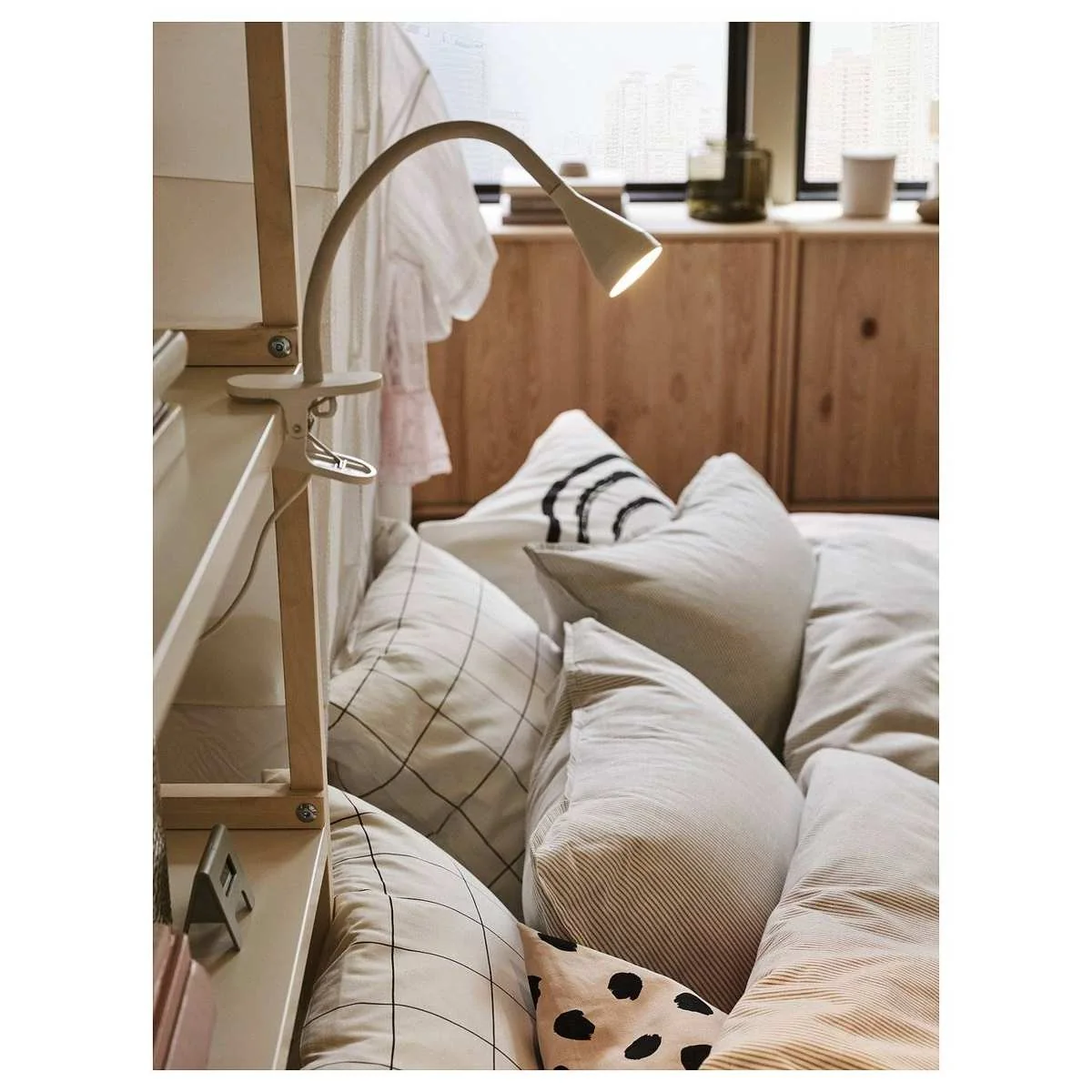
For a living room, the candidate might be a shelf beside an armchair or the edge of a narrow side table. A flat-looking edge is a starting point for checking the lamp and furniture instructions, rather than proof that the combination is suitable. Rounded trim, delicate finishes, and uncertain furniture construction need product-specific guidance before a choice.
The wider living room lighting guide helps decide whether the seat needs focused reading light or the room needs a broader pool of light. Choose the job before the lamp.
Compare the furniture edge with the exact clamp range
The right gripping point still has to fit the lamp you choose. IKEA lists a clamping range of ⅓–1¾ inches for its white NÄVLINGE LED clamp spotlight, article 204.498.95. Those limits belong to that model. Other lamps can have different ranges.
Measure the furniture edge at the intended attachment point and compare it with the current model’s instructions. Include any trim that occupies the gripping area. A measurement from the middle of the shelf won’t describe a thicker lip at the front.
I would rule out an uncertain furniture-and-clamp pairing before choosing a finish or shade color. An opening range answers a size question; it doesn’t establish the furniture’s load capacity or promise that the clamp won’t mark its surface. The photographs here provide no board-thickness measurements or load tests.
A shelf clamp saves base space but occupies the shelf edge
Once the fit is plausible, consider what the clamp will displace. In the shelf example below, the lamp sits beside books and magazine files, while the lower jaw and cable extend beneath the shelf. There’s no lamp base occupying the display surface, but the front edge is still in use.
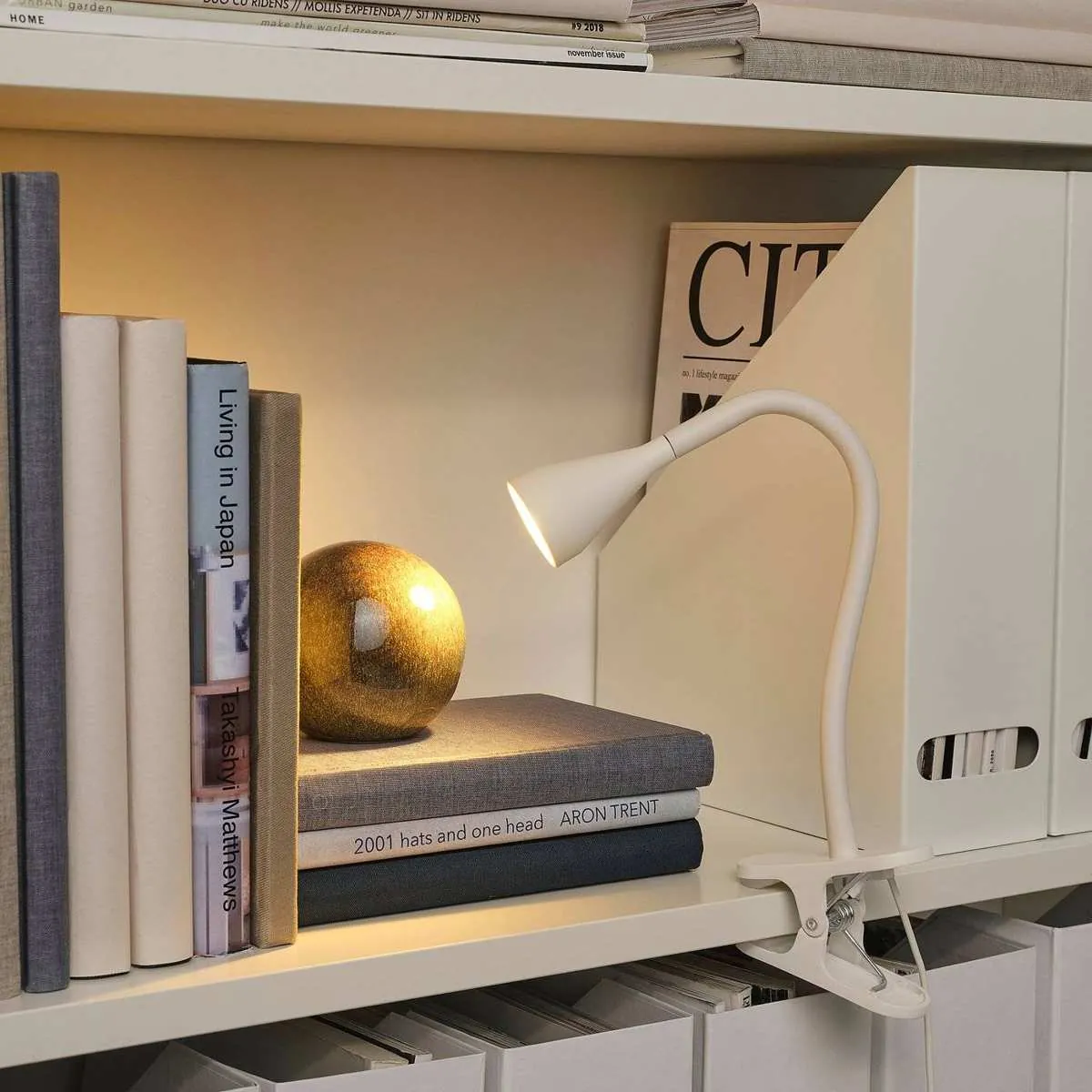
On a side table, that trade can leave more usable room for a cup or book. On a bookcase, the same position may sit in front of something you regularly remove. Picture that everyday use alongside the light: the clamp shouldn’t solve the lamp-base problem by making the furniture awkward to use.
Check where the adjustable lamp head can actually point
Start with the attachment point. The NÄVLINGE has an adjustable arm and head, but that doesn’t establish how far it will reach from your shelf to your lap. A product photograph can’t supply that missing measurement.
Compare the lamp’s dimensions and adjustment instructions with the proposed furniture position. For reading, the question is whether the head can direct light onto the page from that point. A shelf beside the chair and a shelf behind the sofa create different reach problems, even when both accept the clamp.
Check the view from the seat as well. A head that looks neatly tucked away when you’re standing can face you when you sit down. Judge the intended direction from the place where you’ll use the light, including any nearby TV screen.
Allow for the cord route before choosing the shelf
The final constraint runs below the furniture. The listed cord length for the same white NÄVLINGE model is 6 feet 7 inches. Compare that specification with the actual route to the outlet, including the drop from a high shelf and any turn around the furniture.
A nearby outlet on the other side of a walkway may be less useful than one behind the table. Plan a route that keeps the walking path clear and follows the lamp’s instructions; don’t count on pulling the cord tight to make the position work.
Choose the clamp position when the furniture fit, useful light direction, and outlet route all make sense together. If the edge works but the head can’t reach the reading spot, the saved tabletop space won’t solve the lighting problem.
Explore the full guide: Cozy Living Room Lighting: Start With the Lamps You Have