For a living room used mainly for relaxing, I’d start with soft white bulbs. Choose daylight if you prefer a cooler white light for a work corner, ideally in a lamp you can control separately. The decision gets easier once you separate light color from brightness and compare the bulbs in the lamp you already own.
In this guide
Soft white for the sofa, daylight for a separate task
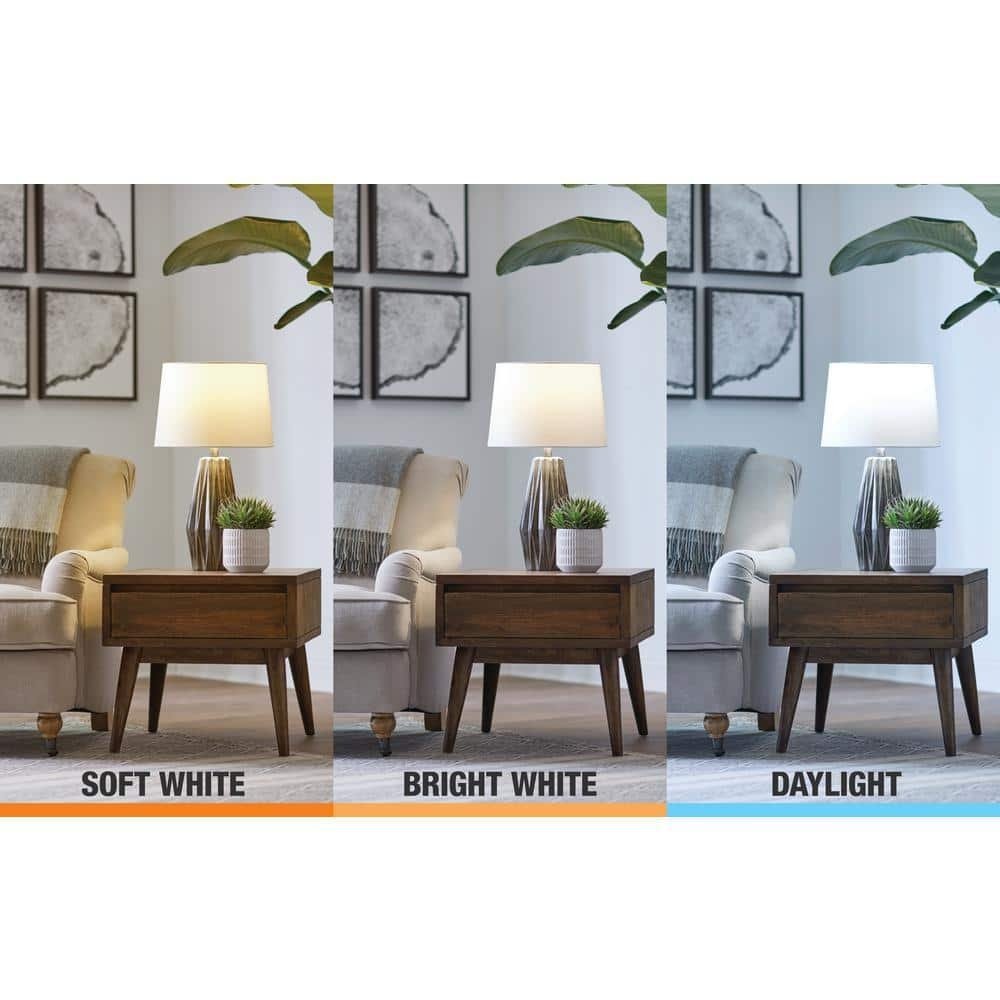
Soft white gives a living room a warmer, more yellow appearance; daylight gives it a cooler, more blue-white appearance. Those names describe the color of the light. They don’t tell you how much light reaches your book, whether a bare bulb will catch your eye, or how well a shaded lamp lights the sofa.
For evening TV, conversation, and sitting around with a book, my starting choice is soft white. The warm appearance suits a room that you want to feel settled rather than crisp. Daylight is worth trying when you actively prefer a cooler look, especially at a desk or craft table that shares the room.
| How the living room gets used | A useful starting choice | What to check before changing more bulbs |
|---|---|---|
| Mostly evening lounging and TV | Soft white in the main seating-area lamps | Whether the light feels too yellow against your walls and fabrics |
| Reading beside the sofa | Start with soft white and check the light on the page | Lamp position, shade, and brightness before switching to daylight |
| A desk or craft corner in the same room | A separately controlled task lamp; try daylight if you like a cooler white | Whether its light spills across the seating area |
| You dislike a golden cast but also dislike cool white | Compare a less yellow warm option before jumping to daylight | The actual Kelvin number on each package |
A room can have more than one job without using one bulb color everywhere. For a room that doubles as an office, I’d use a separately controlled desk lamp so the work surface can have a cooler white without changing the light around the sofa.
If the room has no ceiling light, the no-overhead-lighting layout guide can help you plan general light alongside the task lamp.
A higher Kelvin number won’t fix a dim living room
Choosing a warmer light leaves a second question: is there enough light where you need it? Kelvin (K) describes light color; lumens (lm) describe light output. A daylight label is a poor shortcut for buying a brighter bulb, because a higher color-temperature number doesn’t specify a higher lumen output.
The FTC’s light-bulb shopping guide separates brightness from light appearance on the Lighting Facts label. Look at both. Watts describe energy use, so comparing wattage alone can also send a bulb purchase in the wrong direction.
For example, an 800-lumen soft white bulb and an 800-lumen daylight bulb have the same stated light output. Their color differs. The cooler one may look more striking to you, but changing between those two labels hasn’t bought additional rated lumens. The 800-lumen figure here is a comparison example, not a target for every living-room lamp.
A lamp’s shade and position still matter. If the room looks bright from the doorway but the page on your lap sits in shadow, try moving the reading lamp so it lights the page. If the whole seating area feels dim, check the existing bulbs’ lumen ratings and where the lamps put their light before deciding that warm light is the problem.
Glare calls for another kind of adjustment. When the bulb itself shines straight into your eyes, consider the shade, the lamp’s position, and whether you can lower its output. Swapping daylight for soft white changes color; it may leave that exposed bright point in exactly the same place.
For the wider layout check, use the living-room lamp placement overview.
Read the Kelvin number before the color name
Once brightness is a separate decision, the Kelvin number makes the color choice easier to compare. A common soft white range is 2700–3000K, while daylight commonly falls around 5000–6500K. These are the ranges used in LEDVANCE’s comparison; use the number on the bulb you’re actually considering.
Within the warm range, 2700K is a reasonable first try for a distinctly warm evening look. If that looks too yellow in your room, compare it with 3000K before assuming you need a daylight bulb. My reason for taking that smaller step is simple: it lets you reduce the yellow appearance while staying much closer to the warm end of the scale.
Warm white, soft white, bright white, and cool white can be confusing names to compare across shelves. LEDVANCE, for example, describes bright white as 3500–4100K, between its soft white and daylight ranges. Keep the Kelvin number in your shopping notes so a different name on another package doesn’t become the deciding factor.
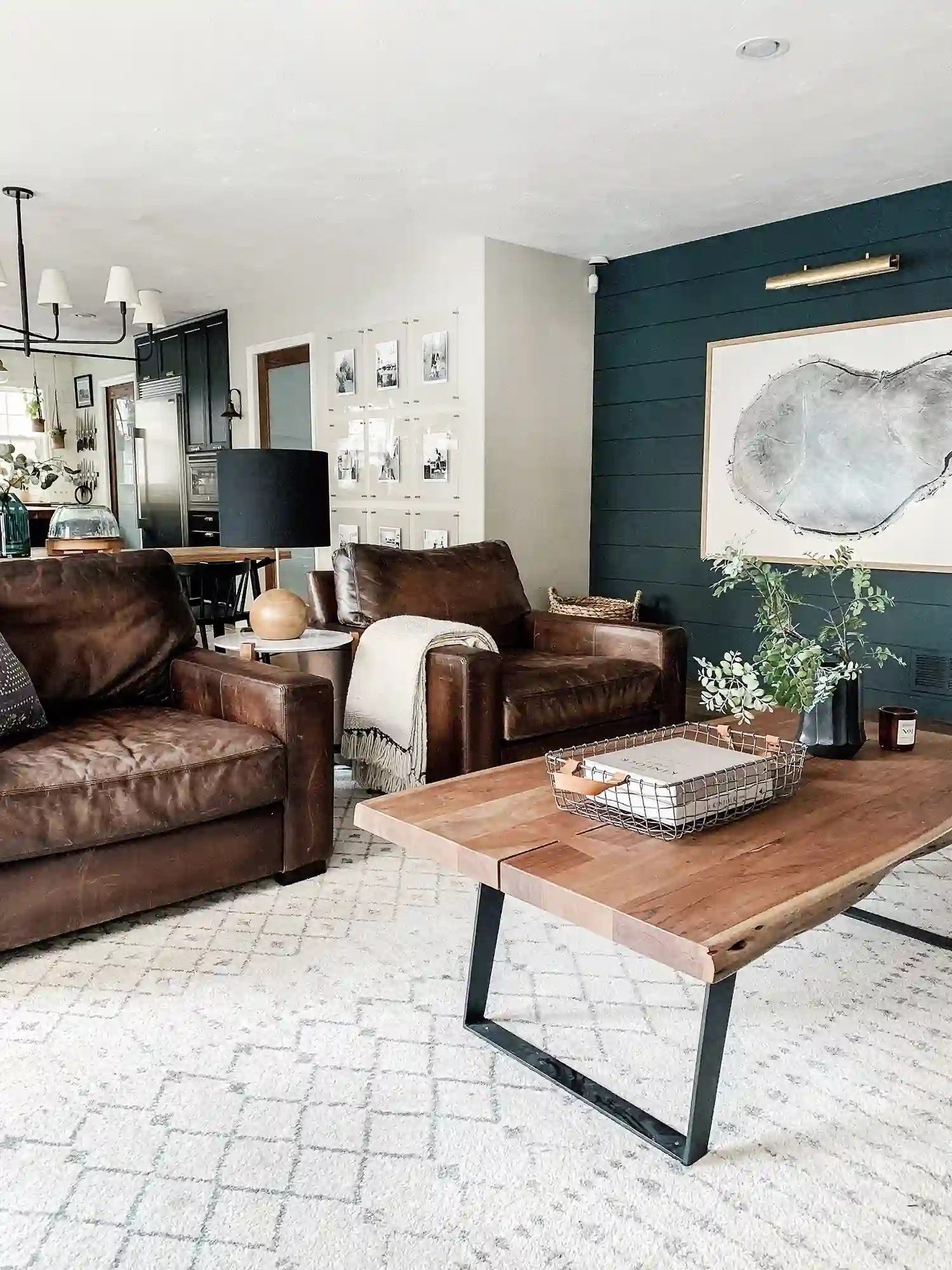
The warm-looking room photo below is useful for looking at how separate lamps share a seating area. Its appearance alone can’t tell you the bulbs’ Kelvin ratings. Use the lamp or bulb specifications for that information, then judge the appearance in your own room.
Compare soft white and daylight in the lamp you already use
A comparison in your existing lamp answers a more useful question than a store display: which light works with this shade, this wall, and this seat? I’d try a small quantity before replacing every bulb. Check the bulb’s fit and the lamp’s requirements, and follow its bulb-changing instructions.
For a useful color comparison, keep the surroundings steady:
- Use the same lamp, shade, and position. Changing the fixture at the same time makes it harder to tell what the bulb color changed.
- Choose similar rated lumens. A much brighter bulb adds a second difference, so the comparison becomes color plus output.
- Look at the surfaces you live with. Check the wall behind the sofa, the upholstery, wood furniture, and a book page. Decide which appearance you actually like, rather than trying to make everything look pure white.
- Judge the room when you use it. Compare after dark for an evening living room, then check in daytime if the space also serves as an office. Keep the other lamps in the same state during each comparison.
Sit in your usual spot for the decision. A lamp that looks attractive standing beside it may be distracting from the sofa. Look for light on the task, an agreeable color on the room’s surfaces, and a bulb that stays out of your direct view; each observation points to a different adjustment.
The illustration above gives a quick sense of the warmer-to-cooler appearance. Its production conditions aren’t supplied, so use it as an illustration, then make the purchase decision in your own lamp. Your shade and room finishes are part of the result.
Keep mixed bulb colors on separate switches
After trying both colors, you may want warm lamps around the sofa and a cooler light at the desk. I’d give that task light its own on/off control. Then the cooler light can serve the work surface without becoming the evening room light every time someone sits down to watch TV.
Within one seating area, matching the main lamps’ Kelvin ratings is a straightforward starting point if the light currently looks patchy. A warm pool on one side and a cool pool on the other can draw attention to the lamps instead of the room. Start with the lamps you normally use together; a rarely used desk light can stay a separate decision.
A color-adjustable bulb or lamp is another option if you want the same fixture to serve different uses. Check its listed color range and brightness at the settings you plan to use. Being able to select a color is useful only if the light also reaches the page or desk comfortably.
Once a bulb works in the room, save its Kelvin rating, lumen output, and model number. Those details make the next replacement easier than trying to remember whether the box said warm, soft, or bright white.
Explore the full guide: Cozy Living Room Lighting: Start With the Lamps You Have