To light a living room with no overhead lighting, combine a floor lamp that spreads light around the room with a lamp beside the seat where you read. Add light to any area that still feels unusable after dark. Plan those positions around existing outlets first, so the arrangement works without a cord crossing the room.
The choice gets easier once you separate the room’s general light from the light needed at a particular seat. Below, start with the outlets, compare lamp shapes, and work through layouts for a sofa against a wall or away from it. Wall-mounted and rechargeable options come later, when the portable setup needs help.
In this guide
Map the outlets before choosing living-room lamps
Start with a rough sketch showing the sofa, TV, entrance, and available outlets. Mark the route you actually walk between them. A lamp that looks right in a corner can become an awkward purchase if its supplied cord ends halfway across that route.
Measure from the proposed lamp base to the outlet along the route the cord would follow. Compare that distance with the lamp’s listed cord length before buying. Keep the plug accessible, and choose a base position where furniture won’t pinch the cord. For a reclining seat, include the space its mechanism needs to move.
The extension-cord limit matters here. The U.S. Consumer Product Safety Commission’s household extension-cord guidance treats extension cords as temporary and warns against running them under carpets, through doorways, or beneath furniture. Build the everyday layout around reachable outlets; if that leaves an essential area unlit, discuss the outlet problem with the landlord or a qualified electrician.
Check any unfamiliar wall switch using an ordinary working lamp plugged into the nearby receptacle. An existing switched outlet may let you turn on an entry lamp as you walk in. Keep the check to normal plug-and-switch use; a switch that appears to do nothing isn’t a reason to open a cover or alter wiring.
For a rental, also decide whether the plan must be completely freestanding. Permission to plug in a lamp and permission to mount a fixture are separate questions. I’d settle that before shopping: it narrows the choices much more usefully than starting with a favorite sconce.
For the wider check of placement, glare, and bulb color, use the living-room lighting diagnosis alongside your outlet sketch.
Which lamps can replace overhead lighting?
A floor lamp with an upward-facing light or a shade that lets light spread outward is a useful starting point for general illumination. A directed reading lamp handles a different job: lighting the page or activity beside a seat. Choose by the light’s direction as well as the lamp’s shape.
| Lamp type | Where it can help | What to check in your room |
|---|---|---|
| Uplighter, also called a torchiere | Sending light toward the ceiling above a seating area | Whether the reflected light reaches the part of the room you use |
| Shaded floor or table lamp | Spreading light beside a sofa, chair, or console | How much light the shade allows outward and whether the bulb is visible from the seat |
| Adjustable reading lamp | Lighting a book or other activity at one seat | Whether you can aim it onto the task without looking into the source |
| Arc floor lamp | Reaching over a sofa or table from a floor base | Space for the base, the arm’s reach, and clearance when standing up |
The distinction is visible even in lamps that share a base. For example, IKEA’s TÅGARP product description separates its upward light from its adjustable reading light. That illustrates the two jobs; it doesn’t mean every dual-head lamp has the same controls or output.
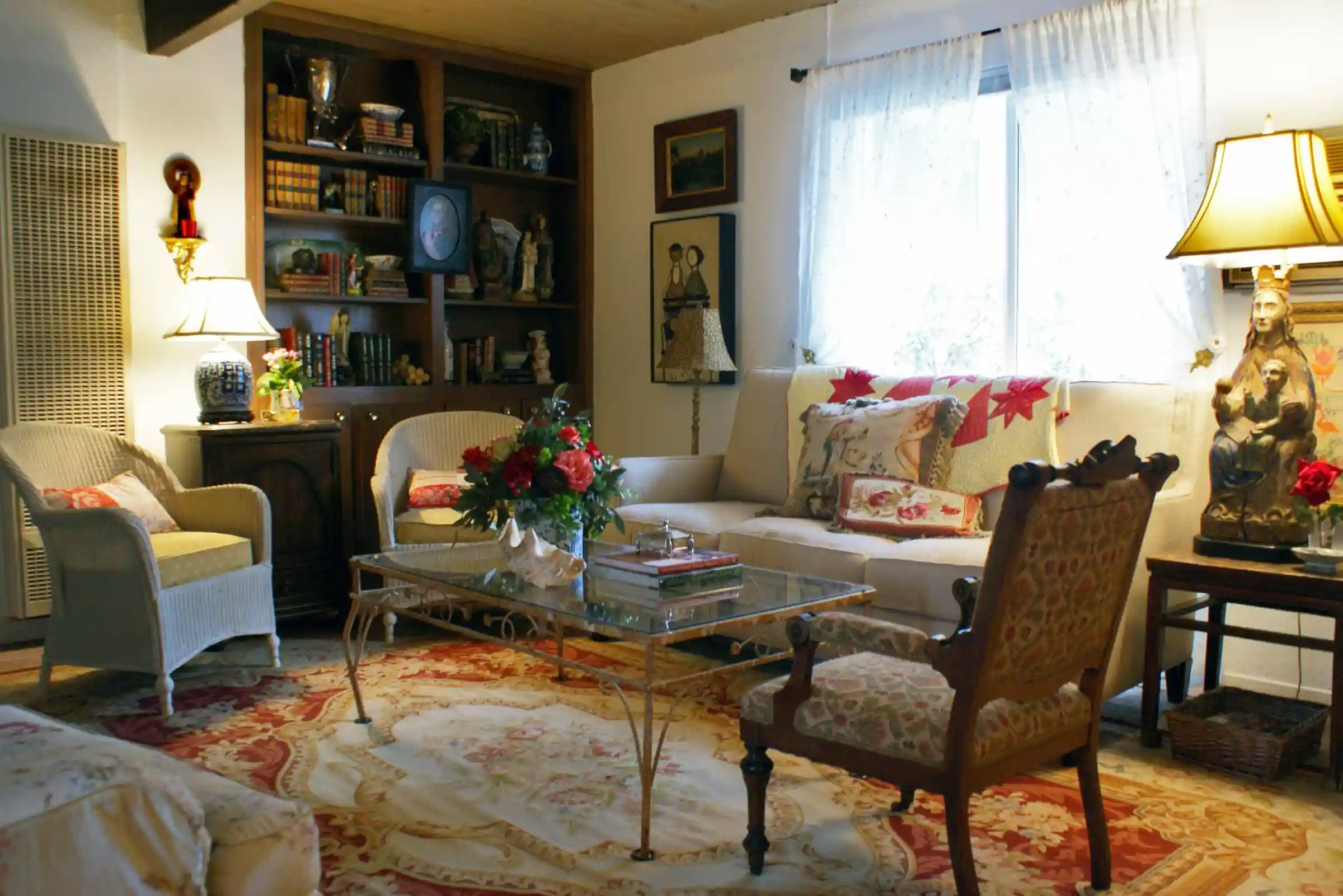
Notice how the shaded lamps sit around the seating group rather than gathering in the middle. Use that spread of positions as a layout example; the photograph doesn’t establish how bright the entire room is.
When comparing bulbs, look at lumens, the measure of light output. Watts describe energy use. The FTC’s light-bulb shopping guide explains the distinction and the Lighting Facts label. A brighter bulb can help an underpowered lamp, but changing its output won’t move the light to the other end of the sofa.
Choose light color separately from output; the soft white and daylight comparison helps you try that choice in the lamp you already use.
Before replacing a bulb, check the lamp’s instructions for the allowed bulb type and rating. If you want dimming, check compatibility for the particular bulb, lamp, and control together. I’d choose the light distribution first, then the controls; an app is less useful when the lamp itself illuminates the wrong spot.
If you’re unsure whether to add another fixture, count the lighting gaps around your seats before buying more.
Place plug-in lamps around the sofa and the room’s edges
Once the lamp types have a job, arrange them around the furniture you already have. The sofa’s relationship to the outlets is usually the deciding constraint. These two layouts are starting suggestions to try with existing lamps, rather than measured plans for a particular room.
Sofa against a wall
For a sofa along a wall, try a general-light floor lamp beside one end and a shaded table lamp at the other, provided both positions can reach outlets. Place the reading light at the end where you actually read. This spreads the useful positions across the seating instead of concentrating every lamp beside the same armrest.
If there’s no room for an end table, compare a slim floor lamp with a lamp on an existing console nearby. Check the base footprint as carefully as the shade. A narrow-looking stem can sit on a wide base that blocks the gap between the sofa and the wall.
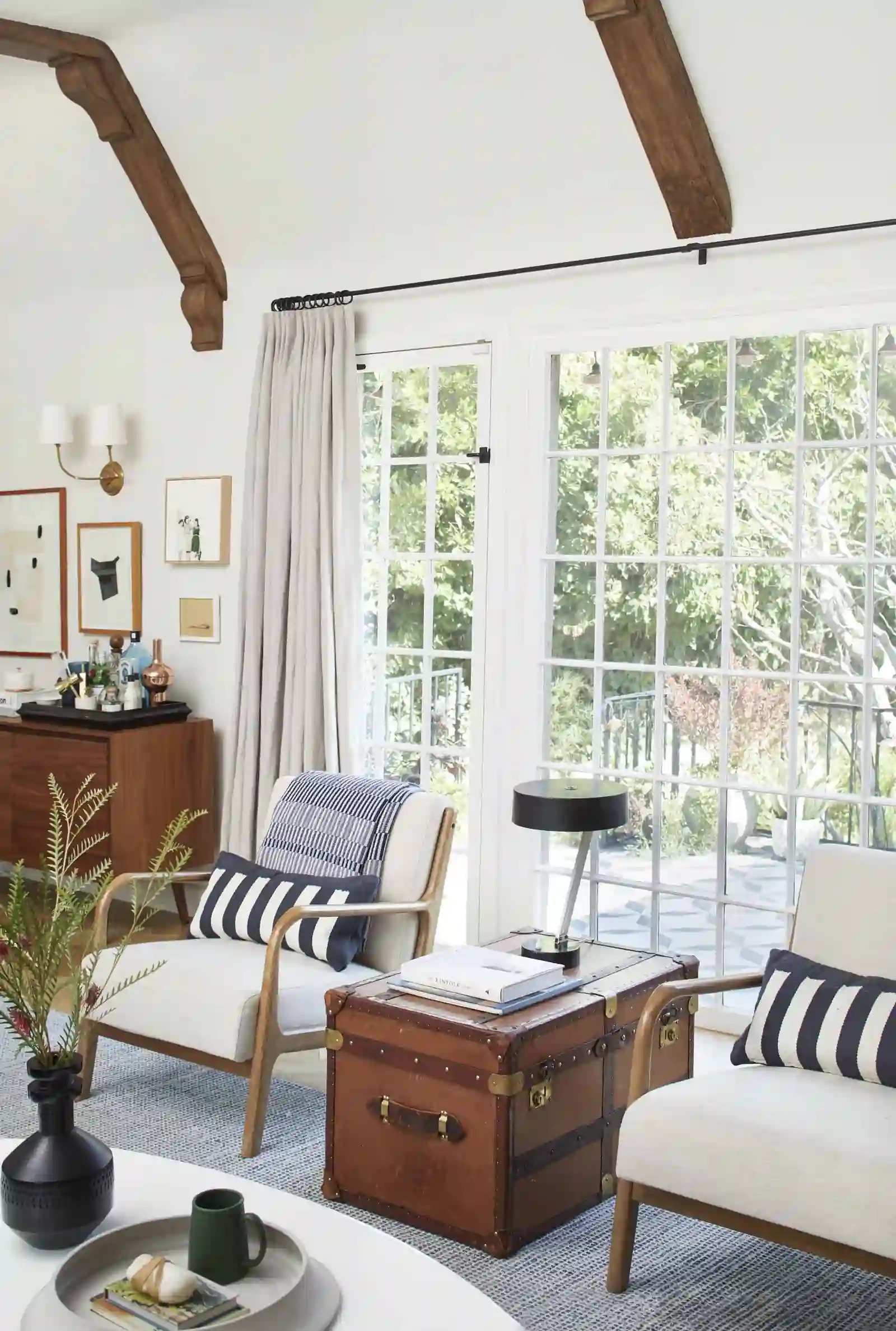
The lamp between these two armchairs shows how an existing surface can bring light close to the seats. The same principle can guide a lamp beside a sofa, though your room may need a different arrangement, especially if the entrance or an armchair sits beyond it. Leave those areas on the sketch, and check them after the seating lamps are on.
Sofa away from the walls
A floating sofa needs a plan that respects the open floor around it. If its intended lamp position would require a cord across a walkway, start with lamps at the room’s perimeter. A shaded floor lamp or uplighter near a wall can provide general light while keeping the middle of the room clear.
For a reading spot, consider whether a chair can sit closer to an outlet, or whether an arc lamp can reach the seat from a suitable base position. Check the actual dimensions before buying. Its arm has to reach far enough, and its shade must leave room for someone to rise from the seat.
A console behind the sofa can hold a table lamp when the cord has a suitable route to an outlet. The console creates a surface, not a new power supply. If the route still crosses open floor, shift the lamp or the reading seat; resist letting the furniture arrangement hide a supply problem.
Once the positions work, coordinate old and new lamps through their shades, finishes, and proportions rather than replacing a useful lamp for its appearance alone.
When plug-in sconces and rechargeable lamps make sense
When freestanding lamps use too much floor or table space, a wall light may be worth considering. A plug-in sconce avoids a hardwired connection, but it still needs a reachable outlet and the mounting method specified for that fixture. “Plug-in” describes its power supply, not permission to make holes.
If your rental permits mounting, check the fixture instructions and the wall requirements before committing. A plug-in pendant adds the further question of overhead support and cord routing. Choose it only when those requirements can be met; a decorative adhesive hook isn’t a substitute for the specified mounting hardware.
If holes are off the table, return to freestanding options first. A compact lamp on an existing shelf or console may solve the space problem without adding a wall fixture. Check the manufacturer’s placement and clearance instructions, especially around curtains or an enclosed shelf.
A purpose-built rechargeable lamp can help at a seat with no convenient cord route. Check its stated output and runtime at the setting you expect to use, plus how you’ll recharge it. Treat it as a candidate for that particular spot until you’ve checked it in the room; battery operation alone says little about how much useful light you’ll get.
Check the lamp layout after dark before buying more
Evaluate the arrangement after sunset, with curtains in their usual evening position. Walk in from the entrance, sit in the seats you use, and try the activities the room needs to support. A corner can look pleasantly dim while a reading seat needs more light; judge those jobs separately.
For reading, open a book in your normal posture and adjust the nearby lamp onto the page. For TV, sit in the usual position and look for lamp reflections on the screen. Move or redirect the offending lamp before assuming the whole room needs to be darker.
| What you notice | Adjustment to try first |
|---|---|
| The sofa is lit, but the entrance feels dark | Move an existing general-light lamp toward that side, if its cord route allows |
| The room looks bright, but the page is hard to read | Reposition the task lamp at the reading seat |
| A bulb is visible when you lean back | Adjust the lamp position or compare a shade that screens it from that seat |
| A lamp reflects in the TV | Shift or redirect that lamp and check from the same viewing position |
| Turning on the lamps feels cumbersome | Choose reachable switches or compatible controls after the positions are settled |
Borrow a lamp from another room while making these adjustments, if you can. Trying a different position is more informative than ordering another fixture simply because a corner is empty. Once the entrance, seating, and reading spot work, the next purchase can answer a specific remaining problem.
Explore the full guide: Cozy Living Room Lighting: Start With the Lamps You Have