Two lamps may be enough for a living room with useful overhead lighting and one seating area. A separate reading chair or an unlit end of a sectional may need another. Start with the lights you have, then count the places they leave unserved during the activities you actually do.
The useful number comes from that check. Here’s how to count existing coverage, work through two seating layouts, and decide whether to move a lamp or bring home another one.
In this guide
- Count the lights your living room already has
- Two or three lamps? Work through the seating layout
- A sofa with usable overhead light
- A sofa and a separate reading chair
- Move a lamp, change a bulb, or add another?
- Fit the next lamp around the furniture you own
- How do you know you have enough living room lamps?
Count the lights your living room already has
Make two short lists: the fixtures in the room and the places that need light. Include ceiling lights and wall lights in the first list, even if you’re shopping specifically for table lamps. Existing fixtures can already be doing a job you’d otherwise ask a new lamp to do.
For this count, a floor lamp is one fixture, including a floor lamp with several bulbs. Write down its separate uses beside it. A model with an uplighter and an adjustable reading head might help light the room and a book, provided both parts reach where you need them.
Then mark the places you use after dark: your usual sofa seat, a second person’s reading spot, the route to the doorway, perhaps a desk behind the couch. Keep decorative wishes separate from everyday needs. Accent lighting for a favorite picture can be a later choice once the reading seats are covered. This is a practical use of layered lighting: count the jobs your lights do, including any they share.
| Existing fixture | Where does its light help? | What still needs attention? |
|---|---|---|
| Ceiling light | General light around the seating area | A reading seat that falls in shadow |
| Table lamp beside the sofa | The nearby seat and side table | The far end of a long sectional |
| Adjustable floor lamp | The chair its head points toward | Other seats outside that pool of light |
| Wall lights | The surrounding wall and part of the room | A page or work surface needing focused light |
Treat the table as a way to make notes, with your own observations in the last two columns. A fixture’s name alone won’t tell you its reach. Switch on your usual evening combination and check the places on your list, including those farther from the outlets.
The room below has a visible tripod floor lamp and wall lights. Counting just the floor lamp would miss some of the existing lighting. The picture illustrates the distinction between portable lamps and the wider lighting setup; its daytime appearance can’t tell us how well each seat works after dark.
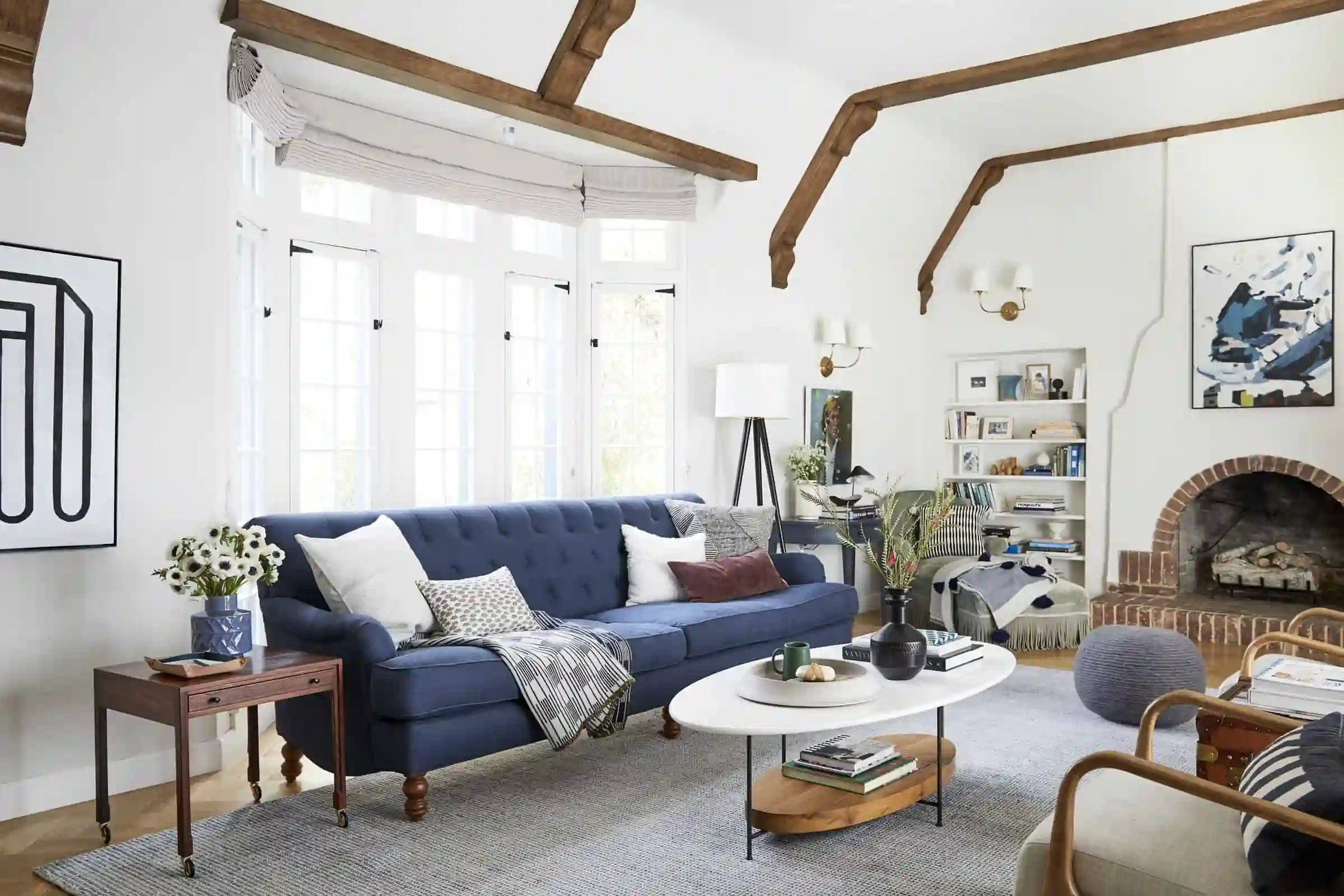
The living-room lighting checks put that count alongside lamp placement, glare, and bulb color.
If there is no ceiling fixture to count, use the living room plan for no overhead lighting to give portable lamps their general-light and reading jobs.
Two or three lamps? Work through the seating layout
Two lamps can cover different jobs well, while three can still leave the seat you use in shadow. Once you’ve listed the existing fixtures, try the following hypothetical layouts. The numbers describe the choices in each example; use the same reasoning with your own seats and lights.
A sofa with usable overhead light
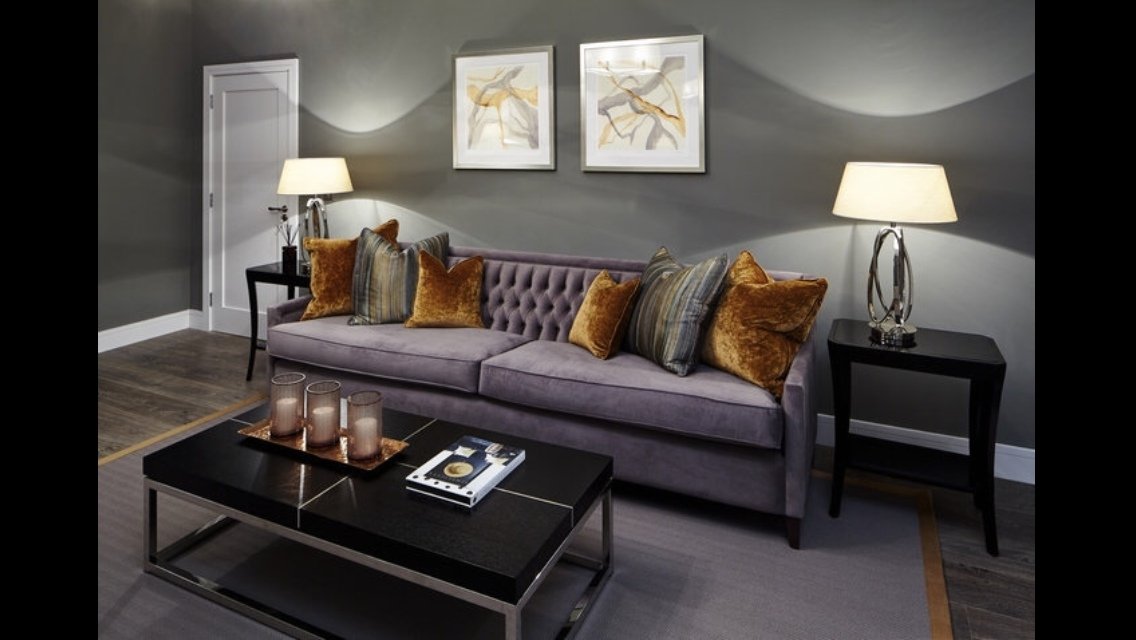
Suppose a compact living room has a ceiling light you like using, a sofa, and side tables at both ends. Two table lamps would give you light beside each end of the sofa. Keep the ceiling light in the plan for the times you want more general illumination.
Now ask whether both table lamps are useful. If one person reads at the left end while another uses the right, each lamp may have a separate purpose. Try reading in those positions together. Check whether the shades and nearby cushions leave either page in shadow, even with both lamps switched on.
If you only use one end of the sofa and the ceiling light already covers the rest of the room comfortably, try a single table lamp first. I’d keep the second side table free until a need appears. Symmetry is a reason to choose a pair for its appearance, but matching living-room lamps adds a separate decorating choice to the practical count.
A sofa and a separate reading chair
For a second example, imagine you already have a floor lamp beside the sofa and a table lamp across the seating area. You also read in an armchair beyond their useful reach. A third lamp beside that chair has a clear purpose, especially when someone else uses the sofa at the same time.
Before buying it, move the table lamp temporarily if there’s a suitable surface near the chair. If the chair becomes comfortable for reading and the sofa area still works, you’ve found a two-lamp arrangement to try. If moving it leaves another regularly used place unserved, keeping that lamp in place and adding a chair light makes more sense.
A longer sectional calls for the same check at both ends and at the bend. Have each reader sit in their usual spot together. A light that works for one person may need to point away from another person’s book, so simultaneous use can reveal a need that a room-wide glance misses.
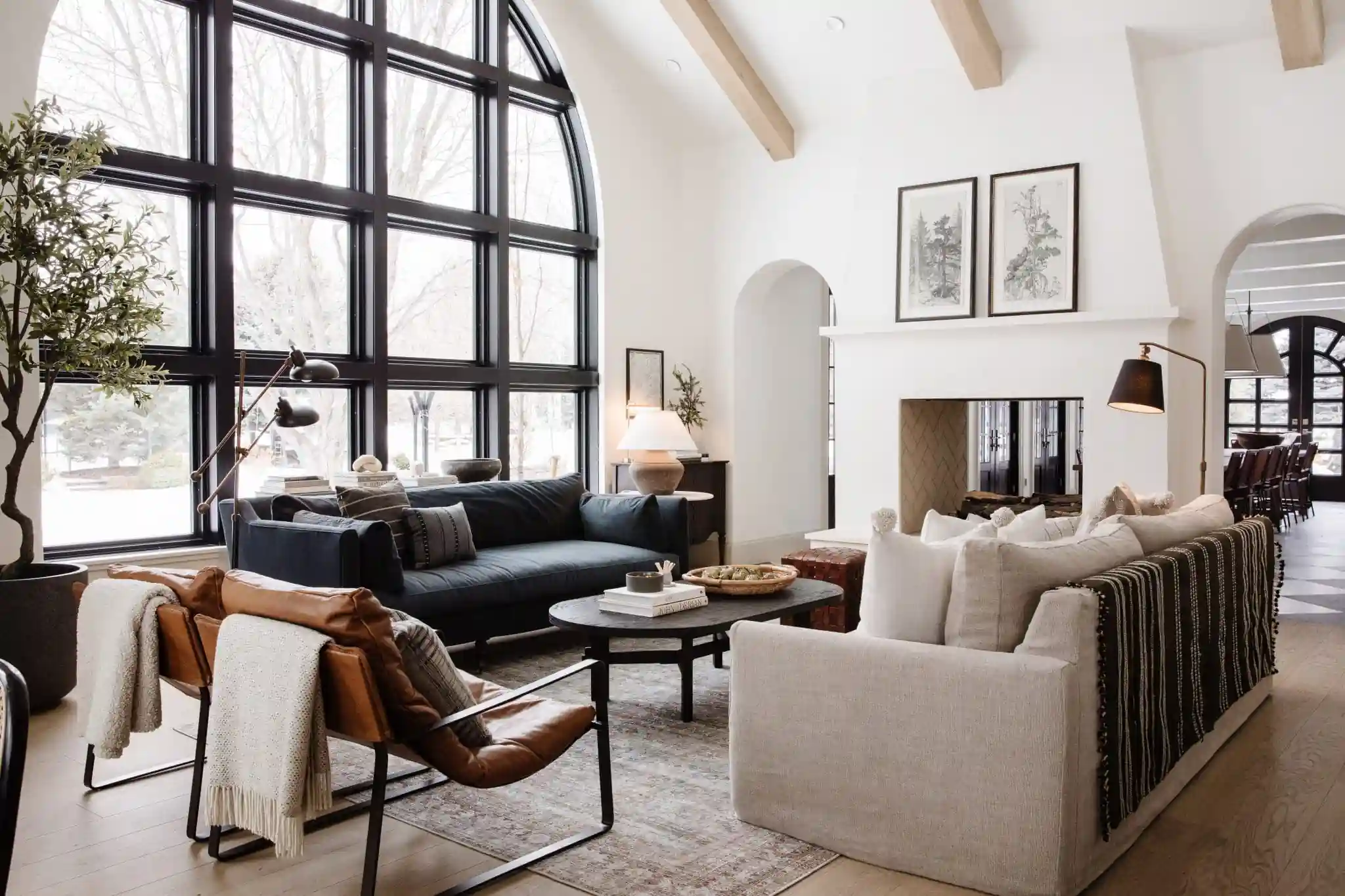
You may also choose a small decorative light for a coffee table or shelf. Count it as another fixture, while being realistic about its job. In the example below, three visible lamps occupy different positions around the seating group. Their presence alone tells us nothing about reading-light coverage.
Move a lamp, change a bulb, or add another?
An unserved seat gives you a place to investigate before you increase the lamp count. Try an existing light there and notice what changes. That comparison helps separate a shortage of fixtures from light that falls in the wrong place or a bulb whose output doesn’t suit the job.
| What happens when you try the existing lamp? | What I’d try next | Why it fits the problem |
|---|---|---|
| Moving it reaches the page and leaves other used areas comfortable | Keep the new position | The existing fixture can cover the need. |
| Light reaches the right surface, but it still feels too dim | Compare the bulb’s lumen rating with a suitable replacement | The fixture may be in the right place already. |
| Moving it helps one reader but leaves another in shadow | Give the second reading position its own light | Both places need light at the same time. |
| Another lamp makes an already bright corner brighter | Try that lamp near the unserved area | Extra light needs to reach the gap to help. |
| The room feels bright enough, but one lamp is uncomfortable to look toward | Adjust its position or direction | A visible bright source needs attention before more light. |
When comparing bulbs, read lumens for light output and watts for energy use. The Federal Trade Commission’s light-bulb guide explains the difference and the Lighting Facts label. Choose a replacement that suits the lamp’s instructions; a brightness comparison is just one part of bulb compatibility.
For a bulb-color decision, compare daylight and soft white in a living room.
I’d save the new-lamp purchase for a gap that survives those adjustments. You should be able to name its location and purpose: light for the armchair while the sofa lamp stays where it is, for example. That description makes choosing the fixture much easier than shopping for “one more lamp.”
Fit the next lamp around the furniture you own
Once a new light has a clear job, find a workable position for it before choosing its style. In a small apartment, an available outlet, a usable tabletop, and the route past the sofa can narrow your options more than the room’s total square footage.
A table lamp makes sense where you already have a stable surface with room to spare. Check the base and shade dimensions against the table, leaving space for the things you put down there. A lamp that displaces your everyday items may create a furniture problem alongside the lighting improvement.
A floor lamp can serve a chair without adding a table, though its base and shade still need space. Check the whole shape against the seat and nearby passage. For an arc lamp, include the reach of the arm; a narrow base doesn’t describe everything extending above it.
Keep controls part of the decision. Can the reader reach the switch, and can someone turn that light off while another person keeps theirs on? Separately usable lamps give the room different evening settings. A lamp that needs furniture moved every time you switch it on is a purchase I’d reconsider.
An outlet on the wrong side of a walking route can rule out an otherwise attractive position. Follow the fixture’s cord and placement instructions and keep the passage clear. Try another location or fixture type if you can’t make the proposed spot work with the room as it stands.
How do you know you have enough living room lamps?
You have enough for your current routine when the seats and activities you use have comfortable light, you can move around the room, and the controls let those uses coexist. Check the arrangement during an ordinary evening, with the curtains in their usual position and daylight out of the equation.
Try switching off one portable lamp at a time. Notice what you lose: a reading spot, useful light near the doorway, or a decorative detail you enjoy. Keep a lamp for any of those reasons if it earns its space. If its contribution is hard to notice, try it elsewhere before adding another fixture nearby.
Too many lamps is often a question of what they take away as well as what they add. Look for crowded tables, awkward access to a seat, and bright reflections that interrupt TV viewing. Solve the specific problem by moving, switching off, or relocating the fixture involved; the total count can stay the same.
Write the next purchase as a sentence: “I need a light beside the armchair that I can use while someone watches TV.” If the sentence has a clear seat, activity, and workable location, you’ve got a reason to shop. If the current lamps already cover that sentence, leave the shopping list empty.
Explore the full guide: Cozy Living Room Lighting: Start With the Lamps You Have