A cordless lamp can give a living room corner a small pool of light when the nearest outlet is awkward to reach. Choose it for a side table or a soft glow beside the sofa, then check how the battery charges. The useful distinction is between a lamp that stays put after charging and one you’ll be happy to carry back to an outlet.
In this guide
Give the cordless lamp a small, specific job
A table lamp beside the sofa can make an overlooked corner feel occupied without adding a floor lamp to a narrow room. I’d start with the surface already there: an end table, a low cabinet, or a shelf that has space for the whole base. A portable lamp saves a cord route during use, but it still takes up tabletop space.
The brass lamp below sits on a table beside the sofa, with its shade directing the glow toward the nearby surface. That’s a useful example of a local lighting position. The photograph doesn’t establish how much light reaches the rest of the room.
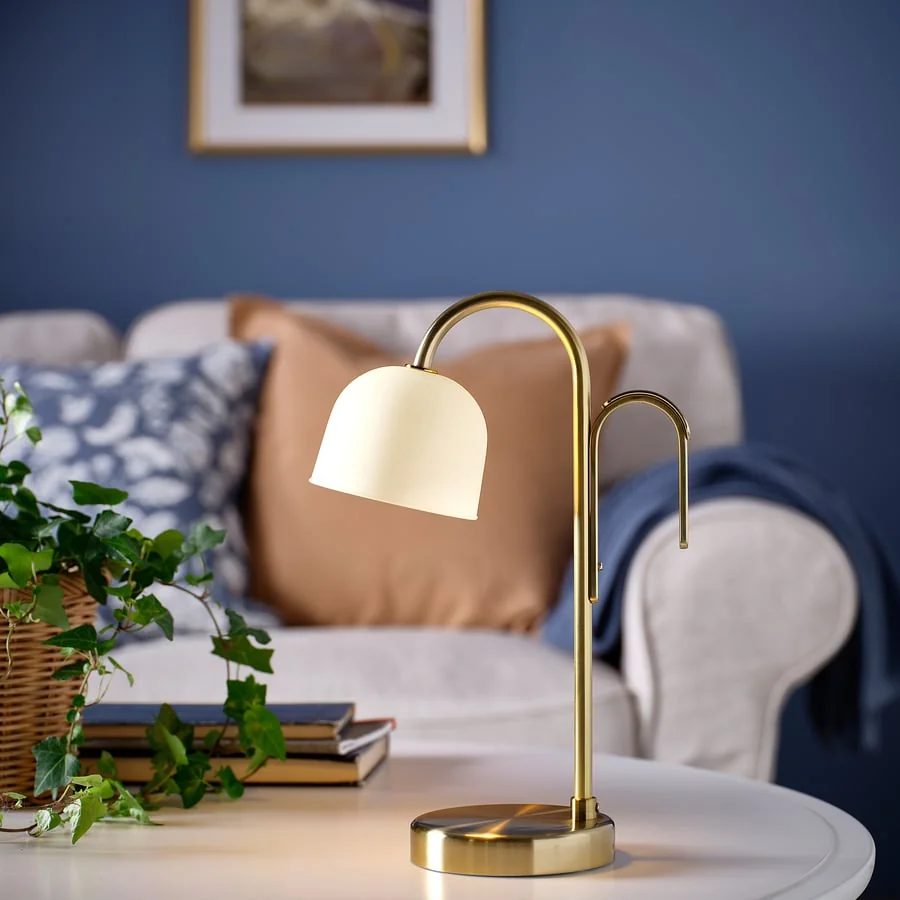
For a book in your lap, judge the light on the page from your actual seat. A glow that looks lovely across the room may leave the page dim. If the whole seating area needs more light, the broader cozy living room lighting guide helps assign separate jobs to the available lamps before you add another small accent.
A USB-C port doesn’t tell you which battery is inside
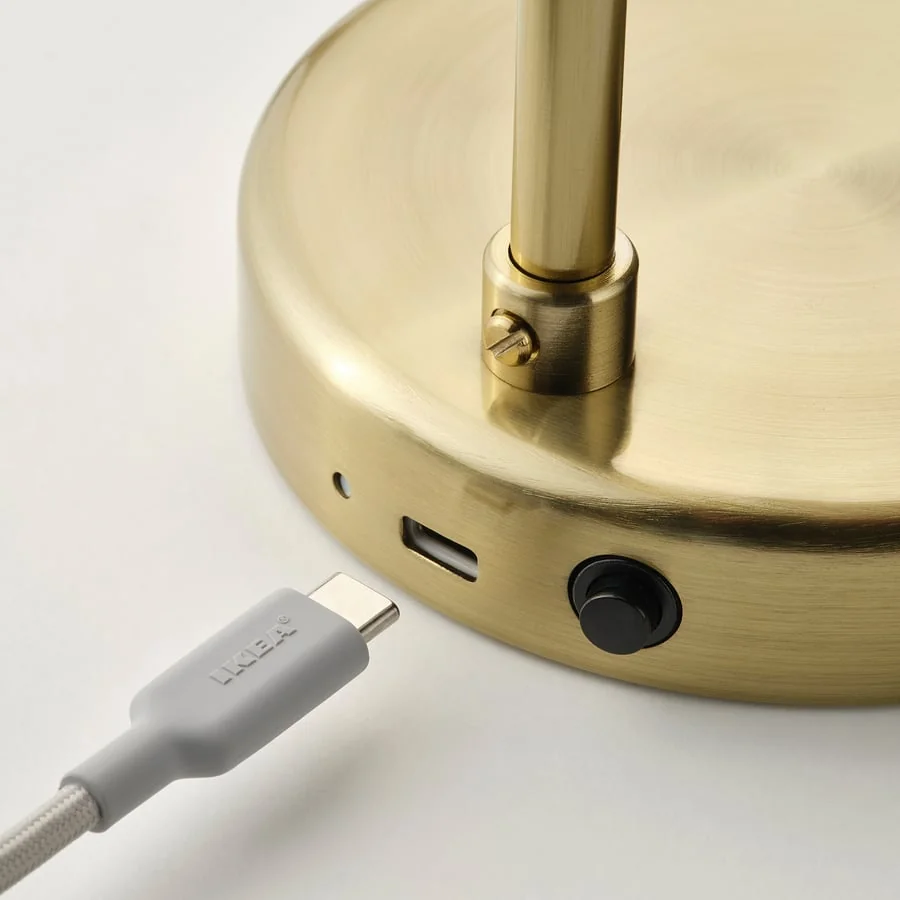
Once a small lamp fits the corner, its charging arrangement becomes the next practical choice. The IKEA TVÅMASTAD product details specify four rechargeable AA batteries, charged through the lamp’s USB-C port. The rechargeable batteries, cable, and USB power adapter are sold separately.
That matters when comparing the complete setup. A lamp with a charging port isn’t necessarily ready for cordless use straight from the box. For this IKEA model, the charging function works only with rechargeable batteries; check the specified battery type before buying the extras.
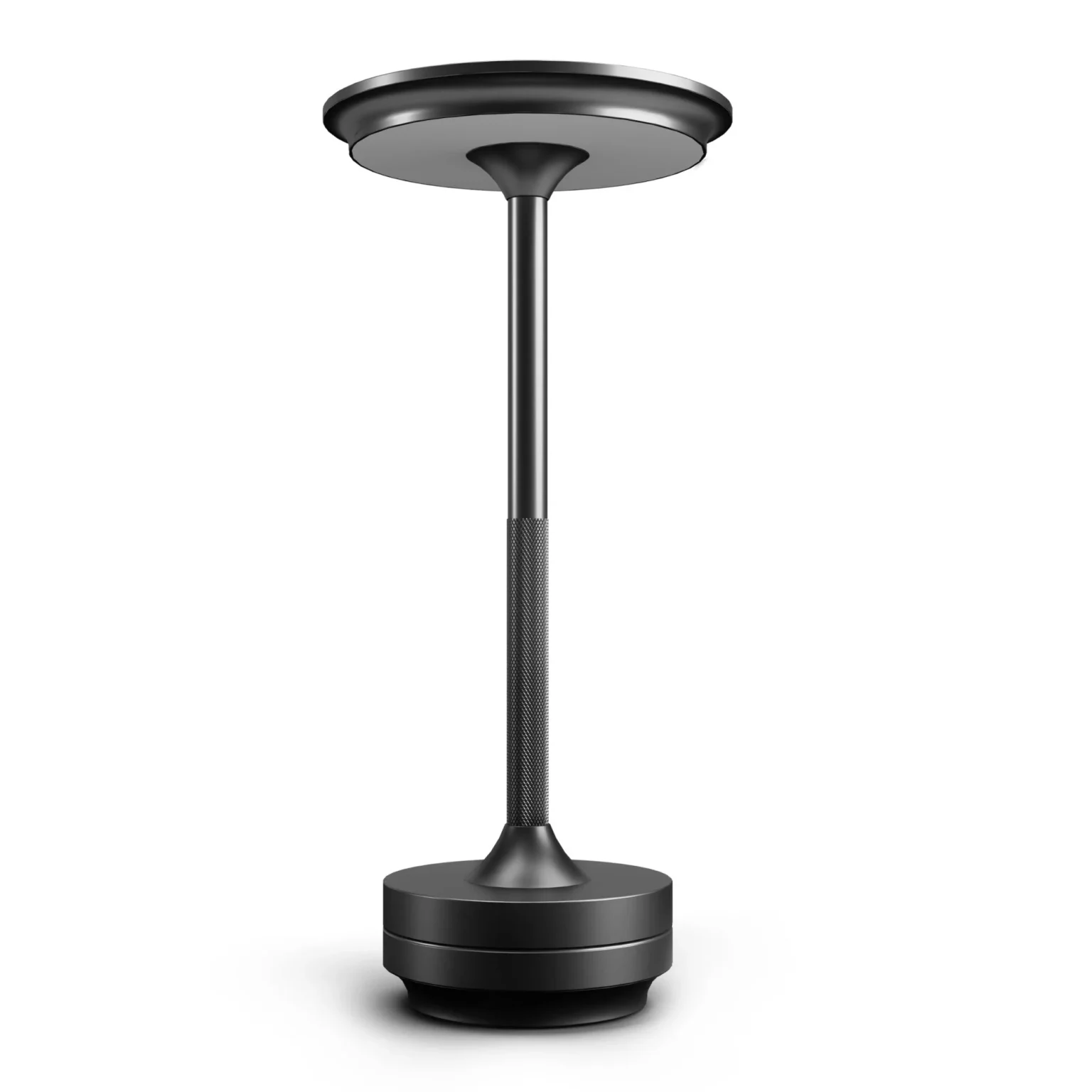
The Feit Electric TABLE/3CCT/BK/BAT uses a built-in battery and includes a USB Type-C cable. Its charging arrangement differs from the separate AA cells in the IKEA lamp. If you’d rather carry the complete lamp to a charging spot, that distinction belongs on your shortlist alongside the shade and finish.
Read battery life with the maker’s conditions attached
The charging setup tells you what comes home with the lamp; the runtime tells you what routine to plan around. IKEA lists 55 lm of output and approximately 20 hours of full light when fully charged. Feit lists 100 lm and a battery-life range of 8–15 hours on a full charge.
Those are manufacturer figures, not Warm Easys test results. IKEA describes full-light operation, while Feit’s stated range doesn’t assign a runtime to each brightness setting. The two figures therefore don’t establish which lamp lasts longer under the same conditions.
Neither output rating, on its own, tells you whether a corner will be bright enough for reading or whether the lamp can light the entire room. Distance, shade, and the surface receiving the light matter to the result. I’d use the ratings to understand the models, then check the intended job rather than treating the larger number as an automatic winner.
Choose a corner you can keep using after charging
A suitable battery arrangement still needs an easy place to live. Before settling on a lamp, check its base against the available table space and picture carrying it to your charging spot. A crowded shelf may look tidy in a photograph yet make that routine annoying.
Sit down and look at the shade, the tabletop, and the TV screen. If the lamp’s bright source or reflection bothers you, try another position while keeping light on the surface you want to use. Leave space for the drink or book that normally occupies the table.
For a gentle point of light beside the sofa, a small rechargeable table lamp is a sensible option to explore. For a reading corner, let the page decide. For a dim room overall, plan the surrounding lights too—the freedom to place a lamp away from an outlet solves location, while the light still has to do its intended job.
Explore the full guide: Cozy Living Room Lighting: Start With the Lamps You Have