In a small living room, start a floor lamp beside the sofa seat you use most, on the side away from the main walking route. A corner works when you want background light; an arc can reach over seating if its base and arm fit. The useful spot depends on the whole lamp and its cord, so check those before settling on a location.
In this guide
Start beside the sofa seat that needs light
For reading, try the lamp beside the sofa arm closest to your usual seat. Place the shade where it can direct light toward your lap, then sit down to judge the result. A lamp that looks balanced from the doorway can still leave your book in shadow or put a bright bulb in your view.
Left or right matters less than which side gives the lamp room to stand. Choose the side that keeps the base away from the route between the door, seating, and kitchen. If both sides fit, compare them from your reading position and from the seats used for watching TV.
The lamp below stands beside the sofa end, with its round base and nearby outlet visible. That relationship is useful to examine before trying a similar position at home.
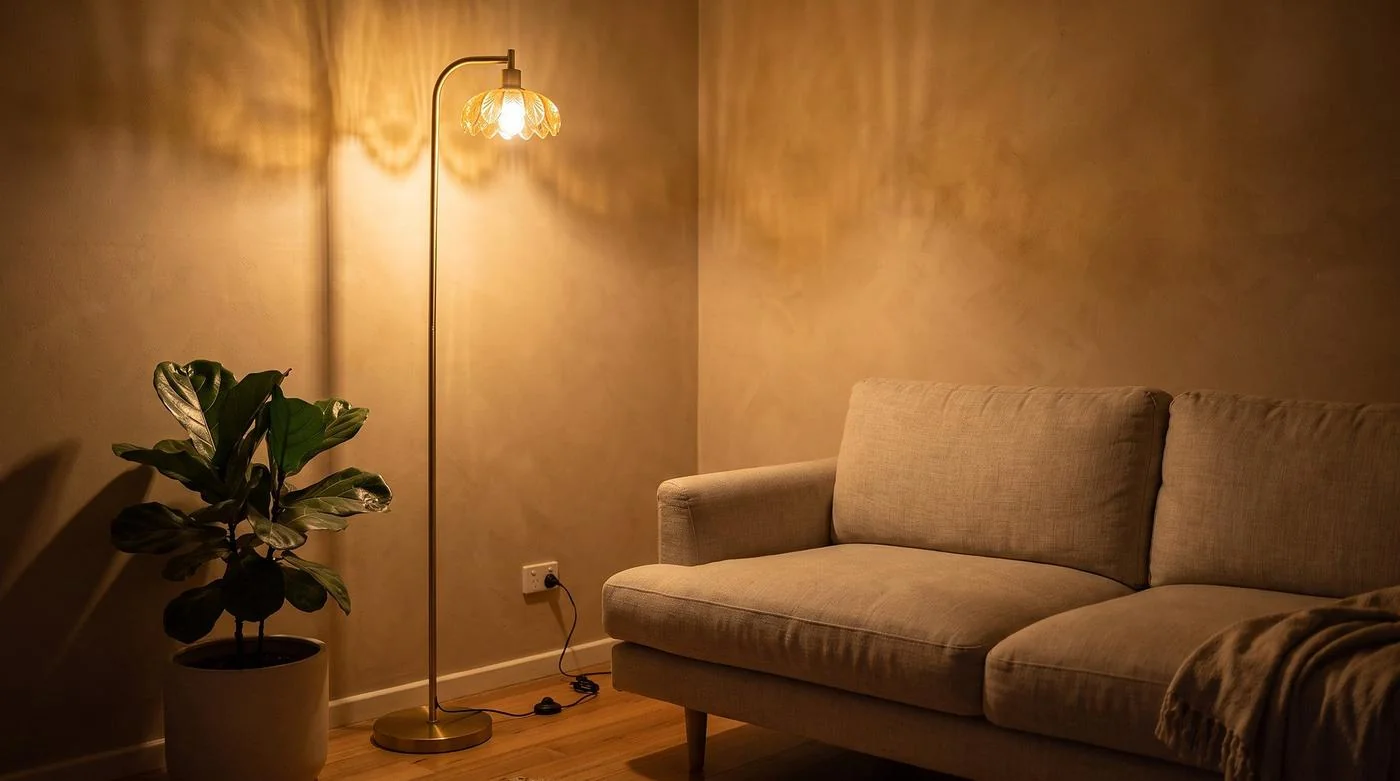
Once a seat has useful light, the wider cozy living room lighting guide can help you decide where background light belongs elsewhere in the room.
Use a corner for background light
A corner becomes the next candidate when the sofa end is too crowded or the reading seat already has a lamp. Try the corner you can see from the sofa, then check the room with the ceiling light off. Judge whether the lamp lights the area you wanted to change rather than choosing a corner simply because it is empty.
Treat a narrow gap between furniture and the wall as a space to measure. A slim pole can hide a much wider base, while a broad shade may extend beyond the gap. Leave access to the lamp’s switch and check the manufacturer’s instructions for the particular lamp before committing to a tight position.
Fit an arc lamp around the sofa’s footprint
An arc lamp offers a different solution when the spot needing light is farther into the seating area. Its base can stand behind or just beyond a sofa arm while the shade reaches over the seat. In a small room, that arrangement needs space for the base, the curve, and the hanging shade—not just the upright pole.
Use the actual model’s assembled dimensions to compare the proposed spot with your room. Mark the base outline and the shade’s projected position with removable tape on the floor, then sit in the seats beneath it. Check the curve against shelves, the ceiling, and the space curtains use when opened; follow the lamp’s instructions for required clearances.
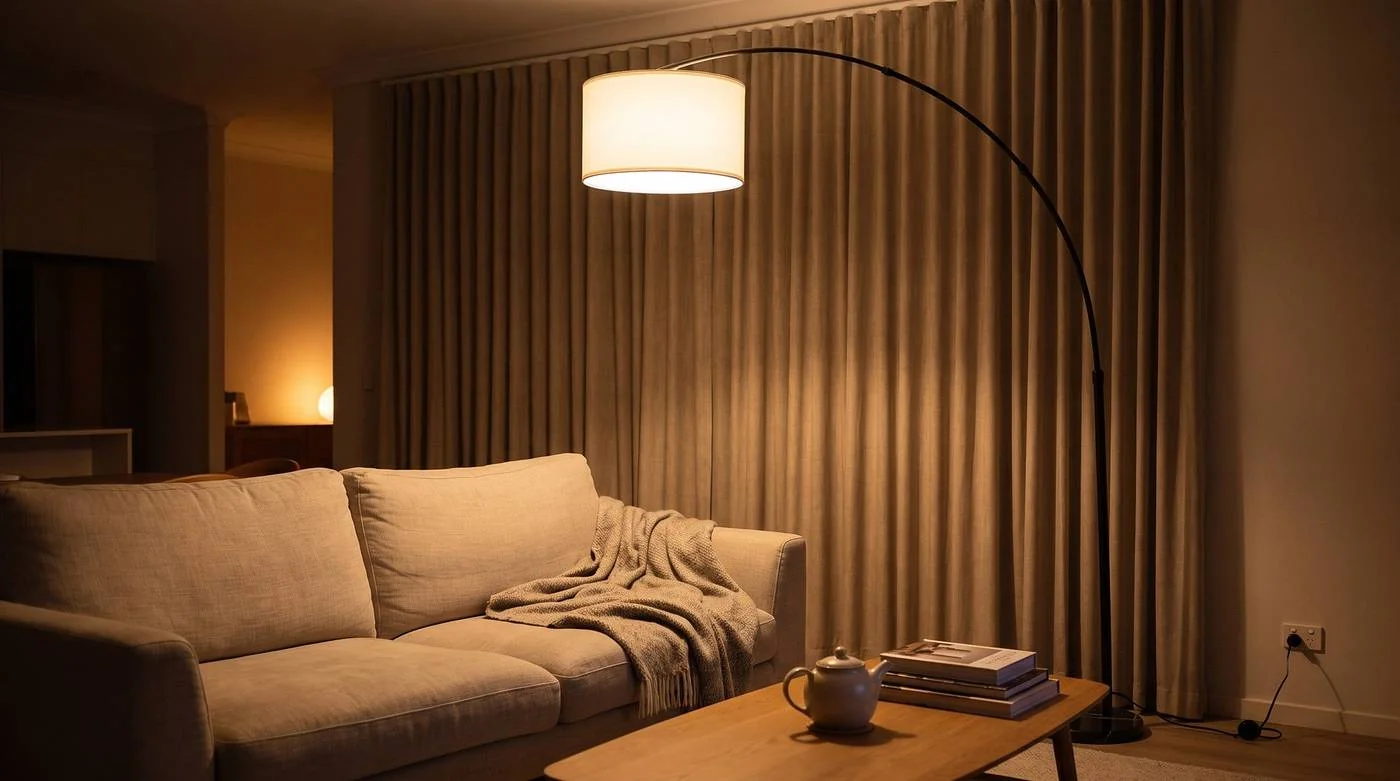
These scene photos illustrate relative positions, not measured small-room layouts or verified safety clearances. For a compact room, I’d favor a simpler beside-seat lamp if fitting an arc means squeezing past its base or ducking under its shade.
Let the outlet rule out awkward lamp spots
Even a position that fits the furniture may fail once you trace the cord back to the outlet. Measure the route the cord would actually follow, including the turn from the lamp toward the wall, and compare it with the lamp’s listed cord length. A straight measurement across the floor can miss that extra distance.
The U.S. Consumer Product Safety Commission’s home safety checklist advises keeping cords out of foot traffic, out from beneath furniture and rugs, and free from furniture pinch points against walls. Use those cautions to reject a location that depends on a cord crossing the room or disappearing under the rug.
With the lamp in its proposed spot, walk the routes you normally take, open nearby doors, and move any chair or curtain that shares the space. Then sit down with the lamp on and check the book, the TV screen, and access to the switch. If the base, shade, or cord interferes with those everyday movements, try the other sofa end or another corner before buying a different lamp.
Explore the full guide: Cozy Living Room Lighting: Start With the Lamps You Have