A hidden LED strip behind a sofa should leave the illuminated wall visible while the sofa back or another solid edge screens the bright light source. Choose the position by looking from the seats and routes you actually use, then consider how you’ll reach the strip and its controls. A convincing front view is only part of the decision.
In this guide
Let the sofa back hide the bright line
Start with the effect you want on the wall. The example below shows green light above a pale sofa, with the light source out of sight from the photographed front-side angle. The useful detail is the separation between the illuminated wall and the concealed source; you don’t need to copy the color.
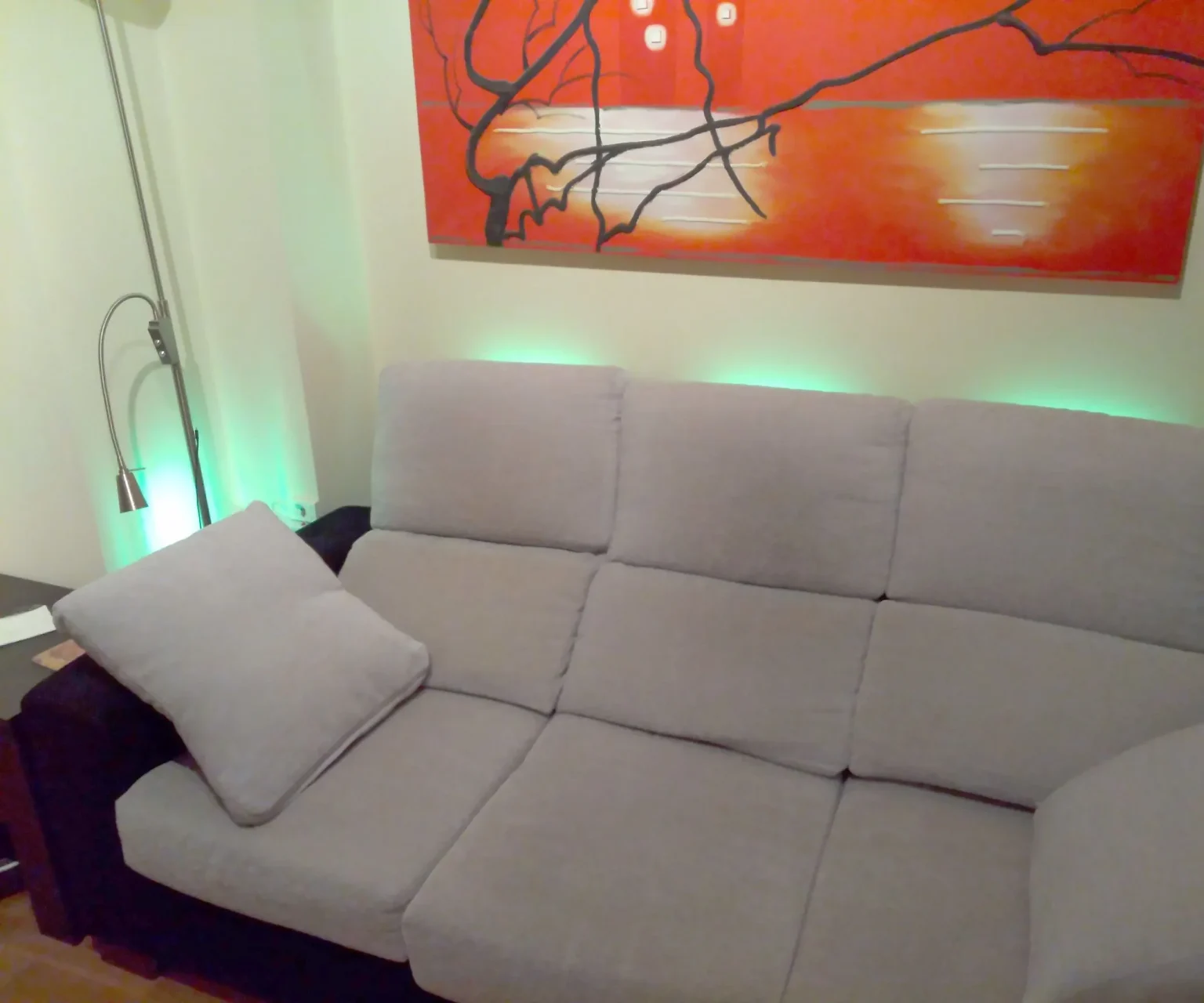
For a similar arrangement, look for an existing solid edge that can screen the source. A sofa back or the edge of a console behind it may offer a candidate position. The furniture’s shape decides whether that position is useful: an open-backed sofa, a low console, or a walkway behind the seating changes what remains visible.
I’d choose a restrained patch of wall glow over a perfectly outlined sofa if completing the outline meant exposing the strip at the ends. There is no need to carry the effect around every corner. Stop the visual plan where the furniture stops concealing it.
Treat this as a background layer when planning your living room’s mix of general, task, and accent light. Keep a separate answer for reading at the sofa rather than asking the wall glow to serve every activity.
Check the sofa ends as well as the center seat
Concealment changes with the viewing position. A sofa can screen a strip from the front while leaving it visible from above or at an open end. The narrow shelf in this example makes that problem easy to see: a bright line is exposed along the wall from the high side angle.
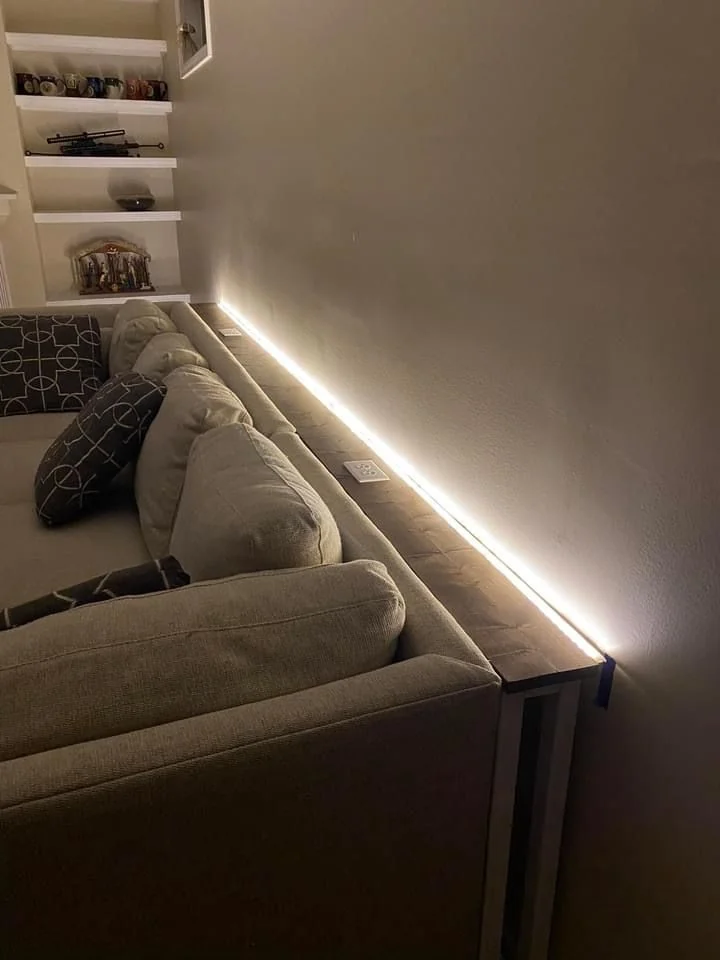
Use those different viewpoints to judge your proposed location before fixing anything in place:
- From each usual seat, look toward the wall and toward both ends of the sofa. Include a nearby armchair if it faces across the sofa back.
- From the doorway and any route beside or behind the sofa, look for an exposed bright line that the seated view missed.
- With the cushions in their everyday positions, consider whether the furniture still supplies the screen you were relying on.
Decide which views matter in your room. A strip briefly visible from an unused corner may be acceptable to you; a line facing your favorite chair deserves a different location. If the source remains exposed, reconsider the screening edge or abandon that position rather than making the whole room dimmer to disguise it.
Separate the visual position from the mounting surface
A position that looks hidden still needs a suitable place to attach the product. Identify the actual surface behind the sofa: painted wall, finished furniture, fabric upholstery, or something else. Check the strip manufacturer’s mounting instructions against that surface instead of assuming the same adhesive suits them all.
IKEA’s ORMANÄS product information describes self-adhesive mounting. That description establishes how the strip attaches; it doesn’t establish damage-free removal from your particular wall or furniture finish. For a rental, confirm what alterations are allowed and how the mounting product is meant to be removed before committing to it.
A freestanding console may give you another surface to consider, but it doesn’t automatically solve the mounting question. Its finish still needs checking, and the proposed strip position still has to pass the side-view check. Choose the surface and the screening edge together.
For installation, use the instructions supplied with the exact strip and power supply. A finished-room photograph can’t supply mounting clearances, cooling requirements, or cutting and connection instructions.
Keep the hidden strip reachable after the sofa goes back
The final furniture position should let you live with the light as well as admire it. Before settling on the arrangement, identify where the plug, power supply, controller, and strip ends would sit. If reaching a control means shifting the sofa every evening, I’d change the plan before attaching the strip.
Consider the occasional jobs too. How would you reach an attachment that comes loose, inspect the product label, or remove the lighting when moving out? A continuous console can conceal the components beautifully while making them awkward to retrieve. Leave yourself an access route that works with the furniture you own.
Keep a simple record of the model and the mounting product, along with their instructions. When the arrangement needs changing, those details are more useful than trying to recognize an unmarked strip behind a heavy sofa.
The placement worth keeping is the one that gives you the wall glow you like from your regular seats, screens the source from the views that bother you, and remains accessible in everyday use. If your sofa can’t provide that combination, a different background light may fit the room better.
Explore the full guide: Cozy Living Room Lighting: Start With the Lamps You Have