A table lamp should be tall enough to put the bottom of its shade around your seated eye level, with the bulb shielded from your normal view. The right total height depends on the table beneath it and the shade above that edge. Start at your seat, rather than choosing a lamp height in isolation.
In this guide
Start with the lampshade at seated eye level
The lower edge of the shade is the useful reference point beside a sofa or reading chair. Rensselaer Polytechnic Institute’s Lighting Research Center recommends placing that edge at eye level and identifies shade size, bulb position, and eye position among the factors that affect placement. Treat the eye-level position as a starting check, then see whether the actual lamp shields the bulb.
Sit where you normally relax, with your usual cushions behind you. A lamp that suits an upright armchair may sit differently beside a sofa where you lean back. Check from that relaxed position before deciding that the base needs to be taller or shorter.
A lit lamp beside a sofa shows why the seat and table belong in the same decision. A room photo can suggest a placement, but it can’t supply your seated eye height.
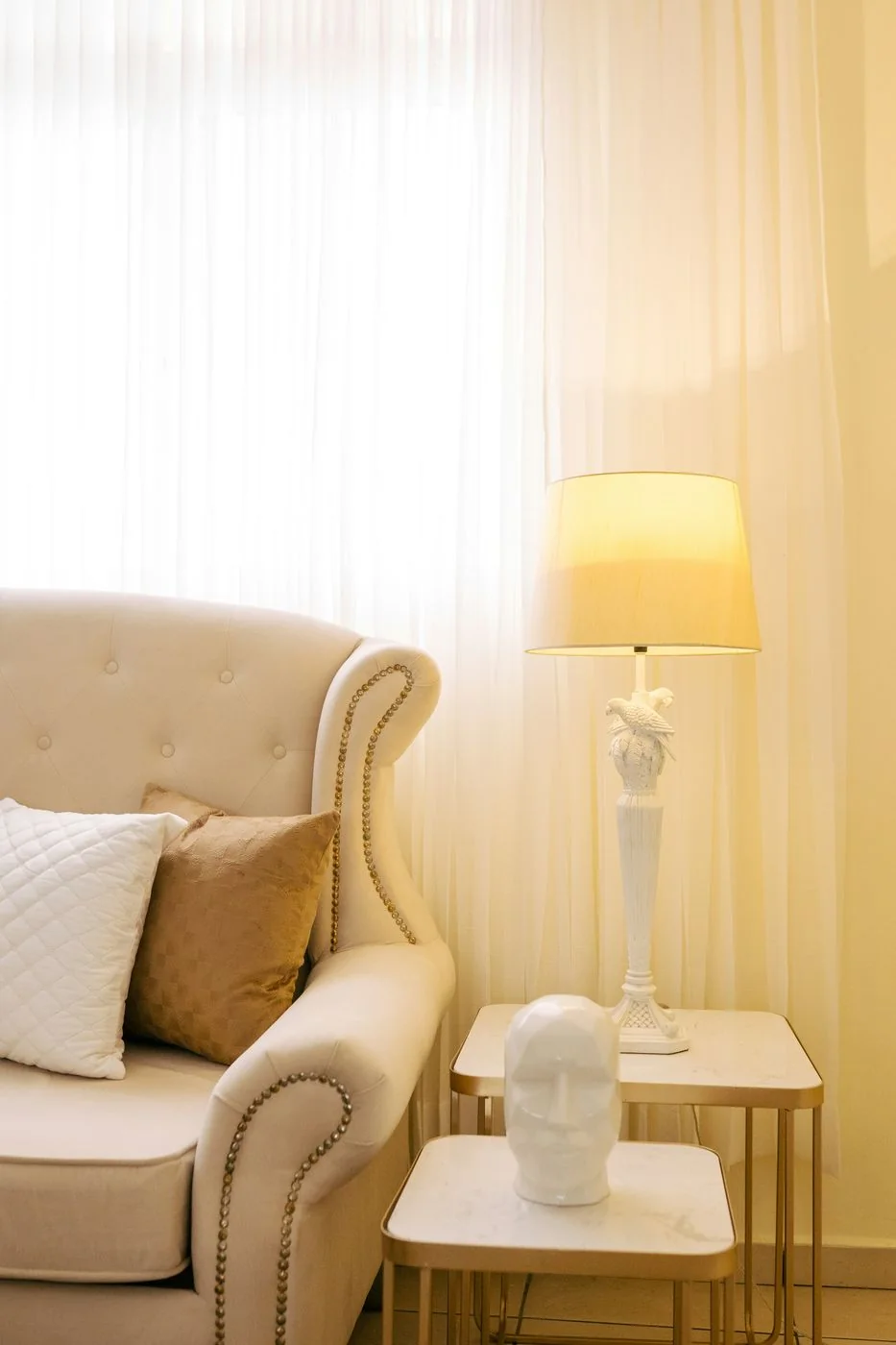
Once the lamp fits your seat, consider its place among the other lights. For a room-wide check, follow the existing-lamp adjustments in cozy living room lighting.
Measure table height and lamp height separately
Your seated sightline gives you a target for the shade edge; the tabletop tells you how far the lamp must lift it. Keep these measurements distinct when comparing lamps, especially when a description gives only an overall height.
| Measurement | Where to measure | What it tells you |
|---|---|---|
| Table height | Floor to tabletop | The height already supplied by your furniture |
| Seated eye height | Floor to your eyes in the usual seat | Your starting target for the lower shade edge |
| Lower shade-edge height | Lamp base bottom to shade bottom | How far the lamp lifts that edge above the table |
| Overall lamp height | Lamp base bottom to its highest point | The assembled height, including the shade and any top fitting |
For a first estimate, subtract table height from seated eye height. The result is the distance from the tabletop to the lower shade edge, not the lamp’s overall height. Ask for that dimension or a dimensioned drawing if the listing doesn’t show it.
Here’s a hypothetical example, not a recommended size: seated eyes at 42 inches above the floor and a 24-inch table leave 18 inches from tabletop to shade bottom. Add a 9-inch-tall shade, and its top reaches 27 inches above the table. A finial above the shade would add to the overall lamp height again.
The example separates measurements that are easy to confuse. Buying an 18-inch overall lamp in that arrangement would put the top of the lamp where you intended the bottom of the shade to be.
Fit the shade and base on your actual side table
Once you’ve estimated the shade-edge height, check the lamp’s width against the tabletop. A height calculation can’t tell you whether the base leaves room for a drink or whether the shade projects into the space you walk through.
My preference is to keep the lamp base fully supported and leave an obvious place for everyday objects. Compare the shade’s widest dimension with the table and nearby chair, too. On a small table, a slim base may save space below while a broad shade still crowds the seat above.
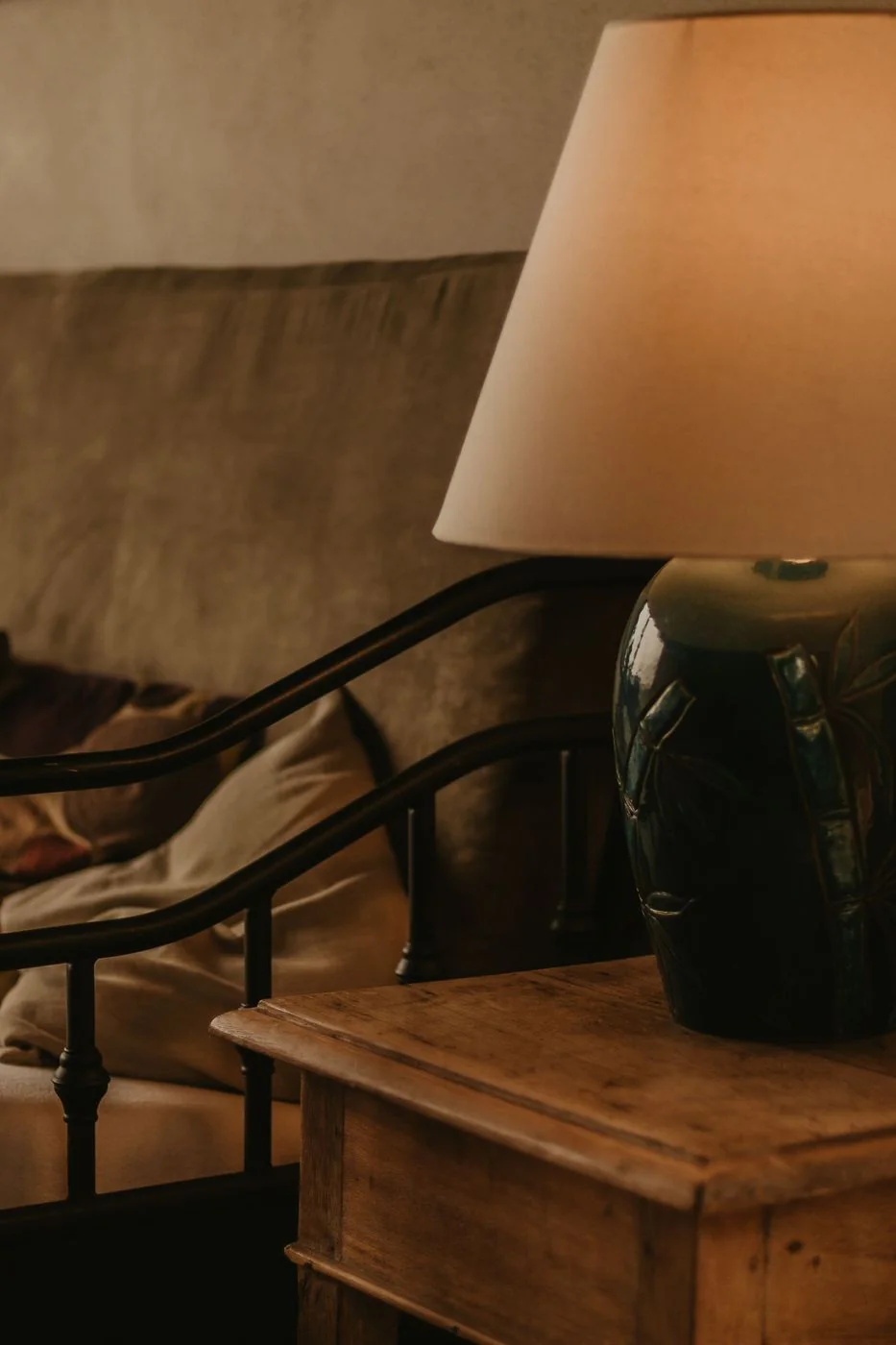
A close view can help you inspect the relationship between shade and base. The detail below doesn’t show enough of the lamp to establish its total height.
Check the lamp with the light on
A lamp can fit the measurements and still be awkward to sit beside. Switch it on, settle into your normal position, and look ahead as well as down at your book. Check whether you can see the bright bulb through the opening and whether the light reaches the page.
If the bulb is exposed below the shade, reconsider the lamp’s position or the shade and bulb combination. Merely choosing a shorter overall lamp doesn’t tell you what will change: the shade may be a different depth, or the bulb may sit differently inside it.
Check reflections separately from the direct view of the bulb. Canada’s occupational health and safety agency, CCOHS, identifies screens and glossy surfaces as sources of reflected glare. If the lamp appears in the television screen, try a different position and check again from the sofa before replacing the lamp for its height alone.
Bedside and console lamps need their own sightline check
The same measurement logic applies beside a bed, but the sofa measurement doesn’t carry over. Use your normal supported reading position in bed and the actual nightstand height. Check the switch from that position as well; a lamp that looks balanced across the room can still be awkward to reach.
A console lamp used mainly for room light has a different job from a sofa-side reading lamp. Judge it from nearby seats as well as from the doorway. Choose the lamp and shade together, and let the view from the place you use determine the final fit.
Explore the full guide: Cozy Living Room Lighting: Start With the Lamps You Have