To clean a lampshade, start with its care instructions and use the approved dry method to lift surface dust. A fabric label alone doesn’t mean a shade can go in the sink. Paper, silk, lining, and glued seams need different treatment, so the guide below separates routine dust removal from stains that need a product-specific answer.
In this guide
Before dusting a lampshade, check the care label
Switch off and disconnect the lamp from power, then let the shade cool before cleaning. Anglepoise includes this preparation in its lamp-care guidance; don’t start while the light is still warm.
Gather a clean, soft duster or cloth and the shade’s instructions. A vacuum with a very soft brush attachment is useful only if those instructions allow it. Keep a lint roller aside until you’ve checked that the shade maker permits adhesive contact with the covering.
The material and the construction both matter. A smooth fabric surface might hide a glued lining, while a pleated shade might be paper or a washable synthetic material. If you can’t identify the shade or find its instructions, ask the maker before trying a wet cleaner. A care label is more useful here than a general recipe involving dish soap.
If you’re also rethinking where the lamp belongs, our cozy living room lighting guide explains ways to combine lamp light with other light sources.
Dust fabric lampshades with the approved soft tool
For an intact fabric shade whose instructions permit brushing or vacuuming, use the maker’s dry-cleaning method. Hudson Valley Lighting Group specifies a very soft vacuum brush or a soft brush, moved in long strokes from the top of the shade to the bottom, including the inside. It warns against either tool on ripped or torn fabric.
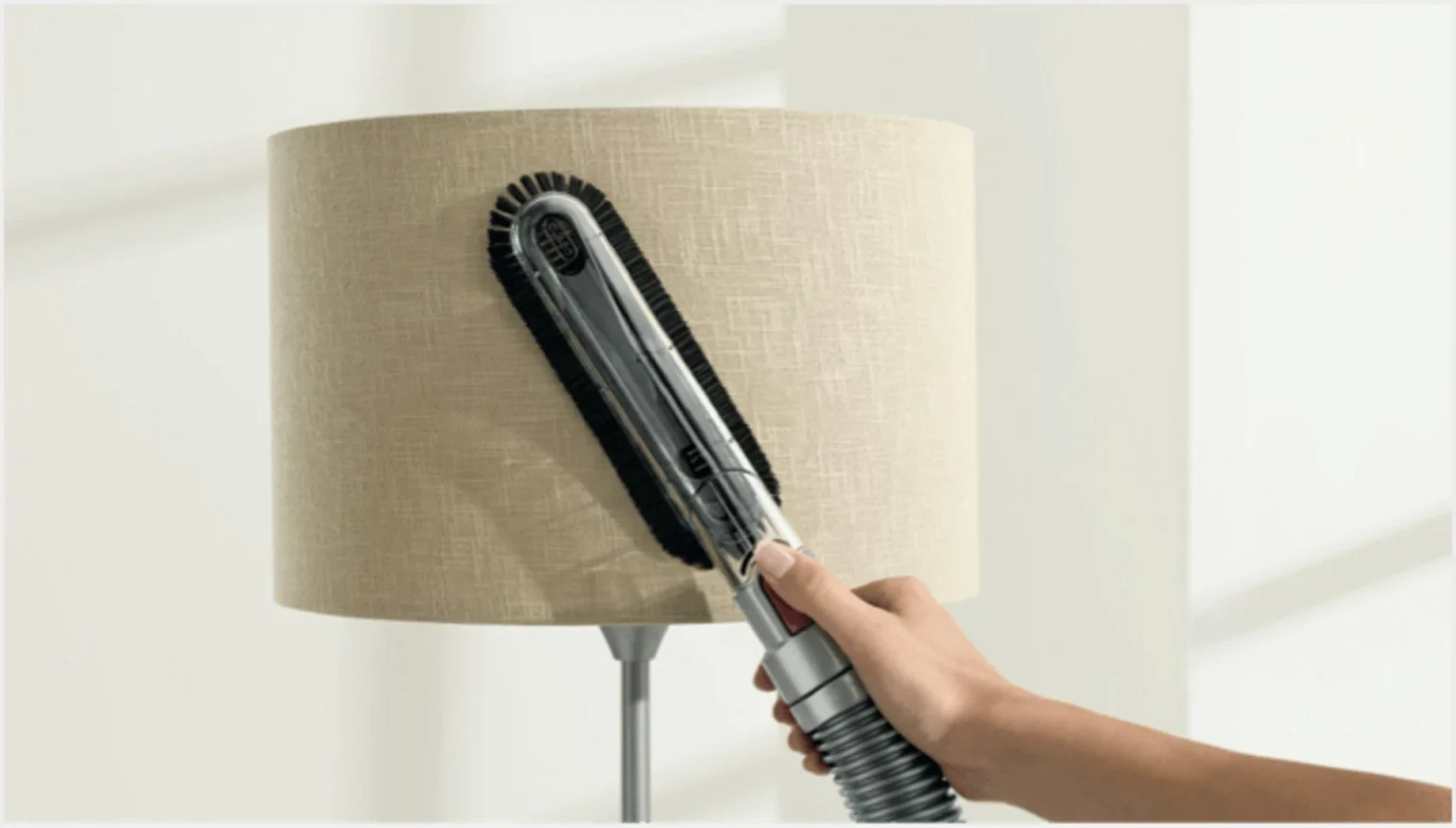
In the picture, the brush touches the outer covering; it doesn’t establish a suitable suction setting for your lamp. Check both the shade instructions and the attachment instructions rather than treating every upholstery tool as interchangeable.
Once loose dust is gone, look at what remains. A dark patch, ring, or greasy mark calls for a stain decision, rather than another round of increasingly firm brushing. Stains need their own method.
Keep paper lampshades on a dry cleaning routine
Paper needs a lighter touch. Le Klint’s paper-shade guidance calls for a soft cloth or soft dust brush and excludes liquids that can damage the paper. Its standard foil shades have separate instructions that allow damp cleaning, so a folded shape alone doesn’t tell you which rule to follow.
For the paper shade pictured below, the care text describes lifting dust with a duster or gently wiping with a dry, soft cloth. Support the lower edge as shown, and keep the touch light: the image’s instructions warn that strong rubbing can tear the paper.
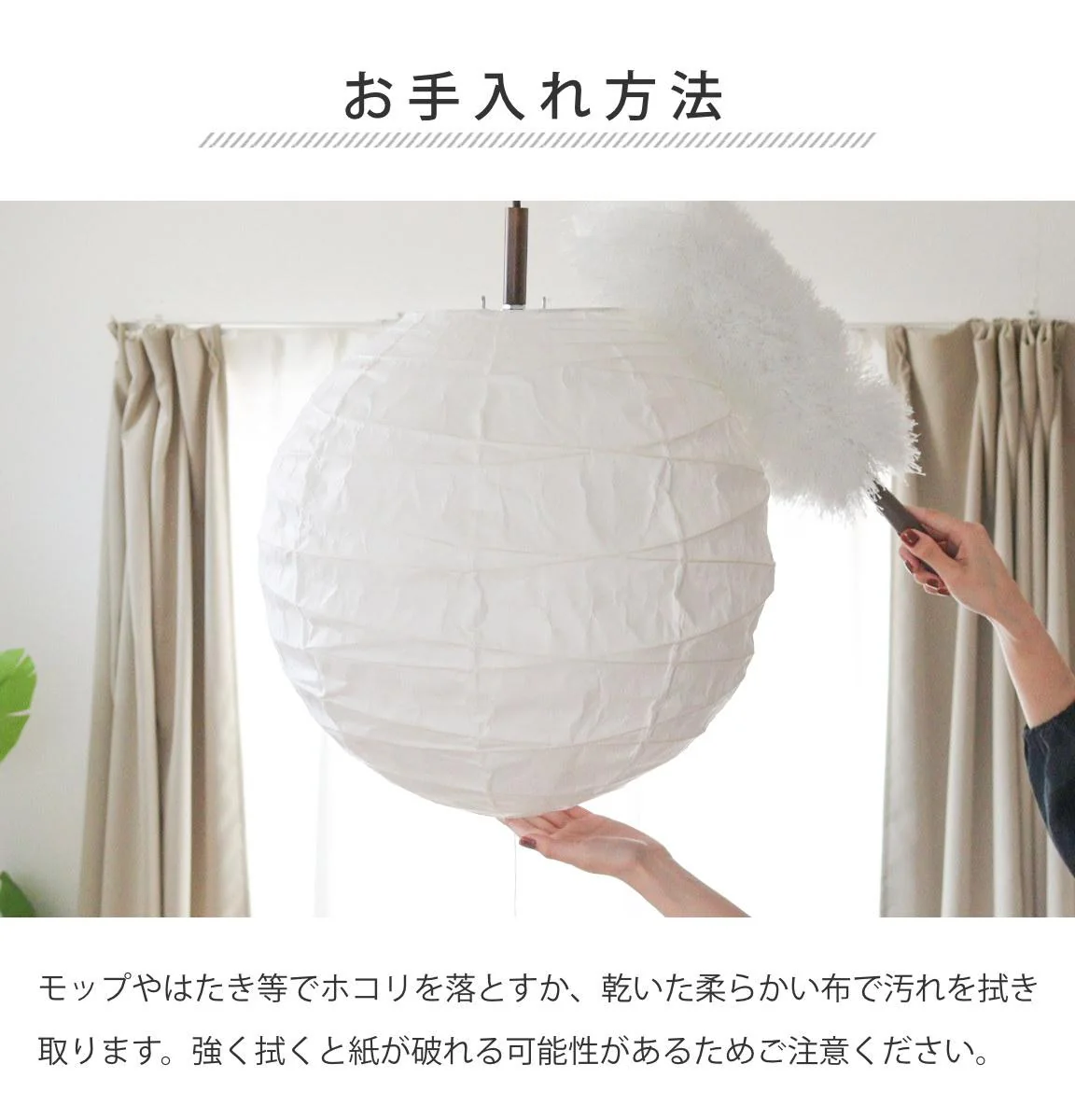
Yellowed paper isn’t always dirty. Le Klint notes that its paper shades develop a warmer, golden tone with age. That distinction matters before you choose a treatment for a color change that ordinary dusting leaves behind.
Check silk and pleated shades before using a lint roller
Silk and pleats need more than a broad fabric-cleaning rule. Use a lint roller only when the shade maker permits it, as the example below illustrates; the photograph doesn’t prove that every delicate covering or trim can tolerate the same contact.
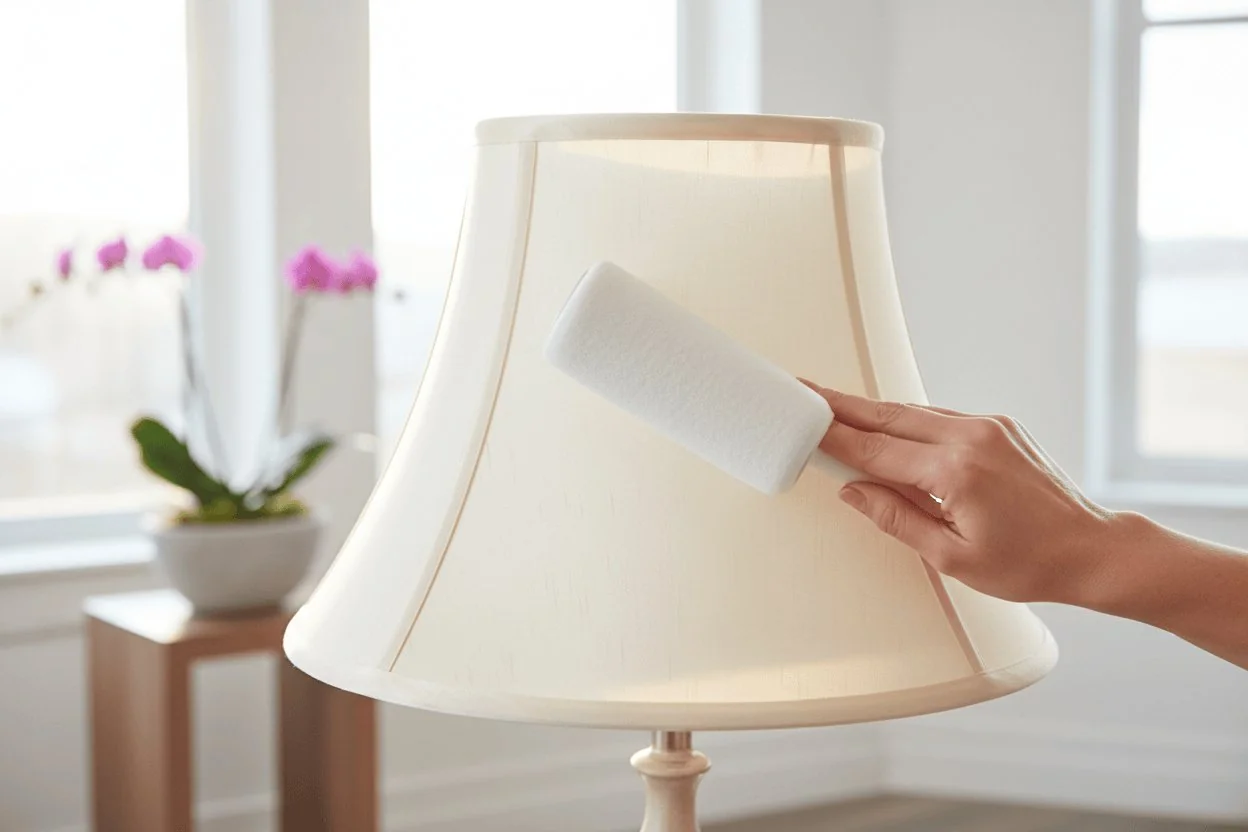
For pleated lampshades, identify the material before choosing a tool or cleaner. Le Klint’s distinction between paper and standard foil is a useful example: similar folds can come with different water-cleaning instructions. A pleated window-shade care sheet isn’t a substitute for the instructions supplied with a lampshade.
Decide whether a lampshade stain can be treated at home
After dry dusting, use the exact shade’s stain instructions. There isn’t one wet-cleaning method that fits all fabric shades. Workstead, for example, permits a mild soap solution on a soft cloth for its silk shades, but says to avoid saturation and submersion. For tougher stains, it suggests a dry-cleaning stick or a professional cleaner. Those directions belong to its shades rather than every shade sold as silk.
If your maker allows spot cleaning, follow its named cleaner and method. If the instructions don’t cover the stain, send the maker a photo with the model name and ask for advice before experimenting. An old shade with an unknown lining or loose trim is a good reason to get that answer first.
If dust removal restores the shade’s appearance, stop there. A stain that remains is the point to check the shade’s own treatment instructions, rather than keep scrubbing.
Explore the full guide: Cozy Living Room Lighting: Start With the Lamps You Have