To hide floor lamp cords, start with a lamp position near an outlet, then follow the wall with a surface cord cover suitable for the lamp’s cord. A cover that blends with the baseboard can make the route less noticeable without putting the cable under a rug. The awkward part is usually the stretch between the lamp and the wall; solve that gap before buying a cover.
In this guide
Move the floor lamp closer to the outlet first
A lamp beside a chair can look perfectly placed while its cord cuts straight across the route to the sofa. Before adding anything to the wall, consider whether the lamp could sit on the other side of the chair, nearer an outlet. A shorter visible route may be enough to tidy the corner.
Look at the whole line from the lamp base to the plug. The loose white loops in the photo below show why checking only the section near the outlet misses much of the problem.
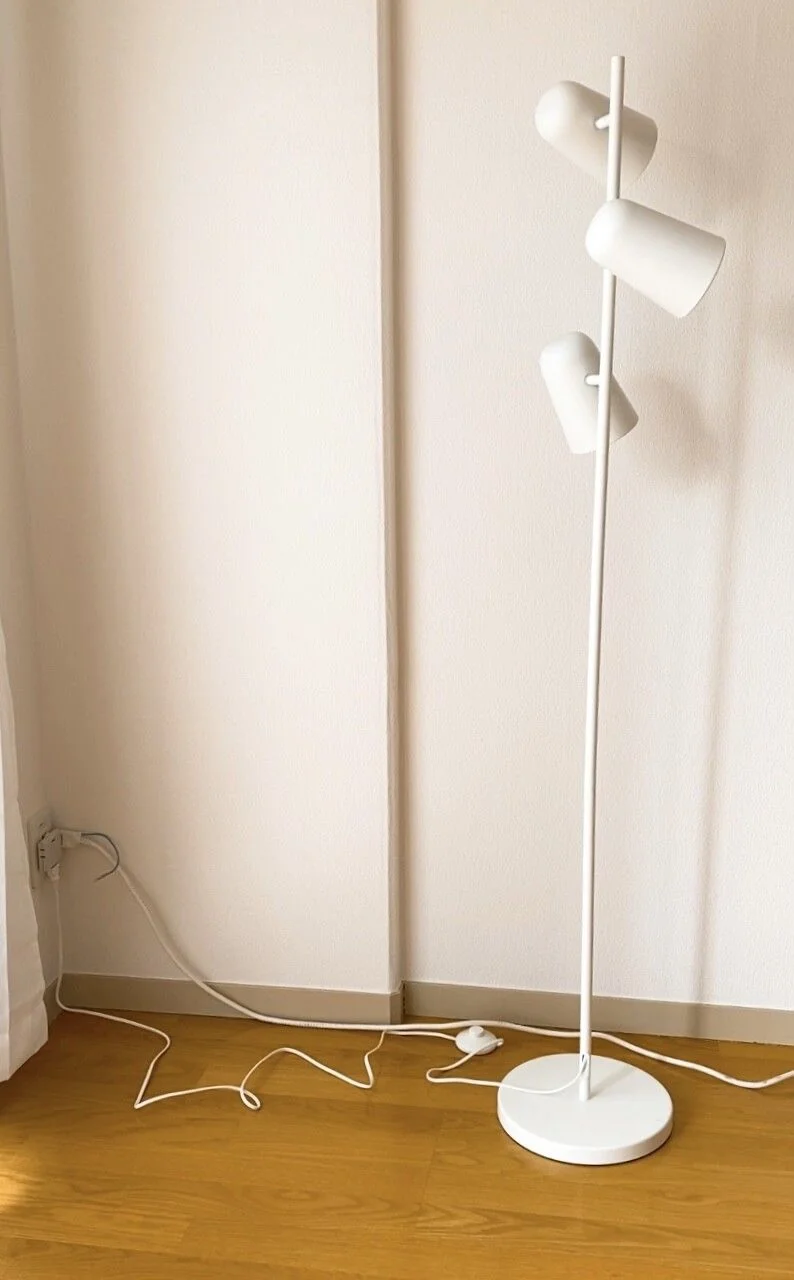
Favor a position where the cord can reach the wall without crossing a doorway or the space where people walk. Follow the lamp’s instructions, and keep the cord clear of furniture pressure and pinching. A sofa can screen a wall-side route from view, but its feet and frame must not rest on or trap the cable.
If moving the lamp changes where the light falls, the living room lighting guide can help you reconsider the seating corner as part of the room’s lighting layout. Choose a position that works for both the light and its connection to the outlet.
Use a baseboard cord cover for the visible wall-side run
Once the lamp is close to the wall, a surface cord cover can give the remaining run a more deliberate line. A raceway is a channel that holds compatible cables against a surface. In the comparison below, the right-hand panel follows the baseboard, with a short vertical section approaching the outlet.
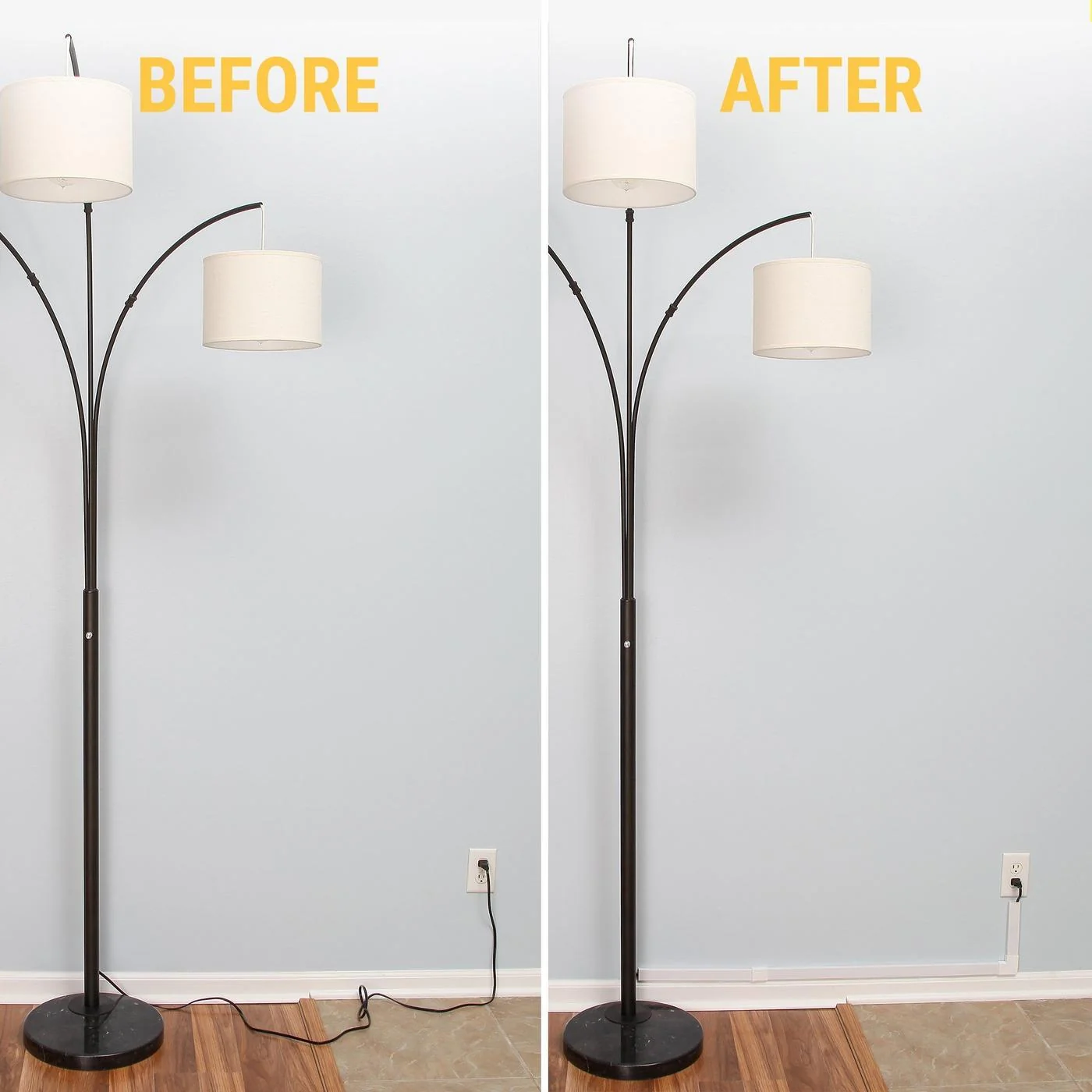
Choose the channel by what it can hold and where its manufacturer permits it to be used. Check that the instructions allow your lamp’s flexible power cord and that the internal space fits it. D-Line, a maker of cord covers, notes that the outside dimensions of its raceways differ from the usable space inside. A narrow-looking cover isn’t useful if the cord won’t fit.
For appearance, compare the cover with the baseboard rather than the lamp. A white line against white trim usually draws less attention than a dark line running along the wall. If the trim is another color, look for a matching finish or a product its maker says can be painted.
The second comparison shows the same visual idea with a white lamp. Notice the outlet as well as the horizontal run: the short connection above the baseboard remains part of the finished look.
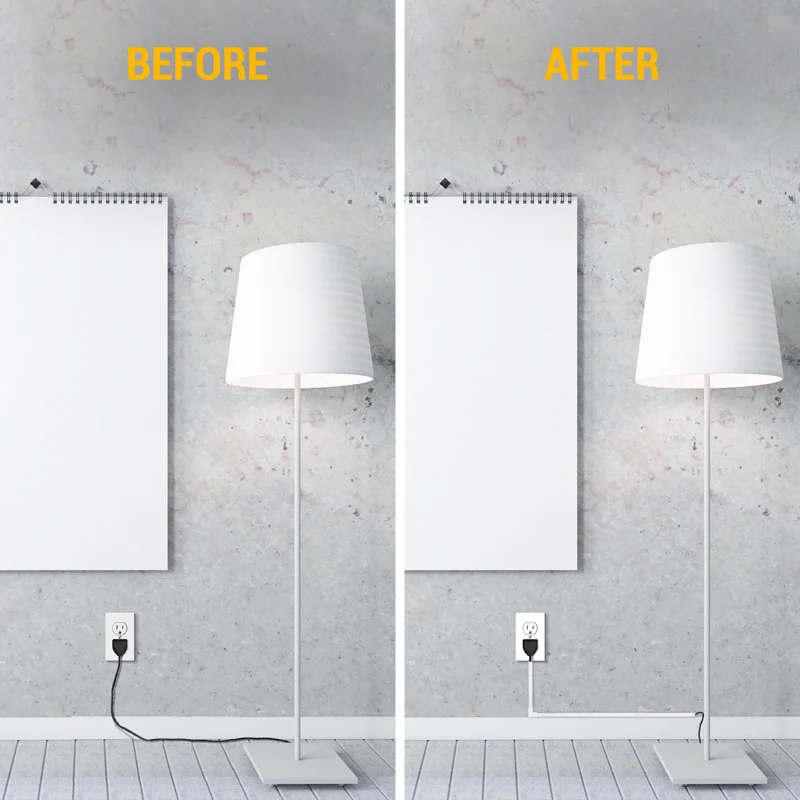
These are examples of the appearance of a covered route. Use the instructions for the cover you actually choose when deciding how to mount it and accommodate corners.
Check adhesive removal before attaching a rental cord cover
A neat baseboard route still needs a mounting method your rental allows. An adhesive backing doesn’t promise damage-free removal: D-Line warns that its self-adhesive raceway forms a strong bond and must be removed cautiously.
Before attaching a cover, check your lease, the wall or trim finish, and the product’s surface and removal instructions. Ask the landlord about anything the lease leaves unclear. A small test in an inconspicuous place may help you assess the finish, but it doesn’t guarantee the full strip will come away cleanly later.
If that uncertainty makes adhesive a poor choice, revisit the lamp position. Leaving a short, orderly cord visible beside the wall can be preferable to committing to a long strip on fragile paint. The room doesn’t need a completely invisible cable to look cared for.
Treat a floor crossing differently from a baseboard run
When a lamp sits away from every wall, a baseboard channel can’t solve the exposed stretch across the floor. Moving the lamp or revising the furniture layout is worth considering before accepting that crossing.
For an unavoidable floor crossing, use a cord protector whose manufacturer permits the cord, floor location, and expected foot traffic. A wall raceway isn’t automatically a floor protector. D-Line’s floor-cover guidance distinguishes products by cord size and traffic, and says the exposed length needs covering rather than leaving part of the trailing cable bare.
A floor protector also remains visible. If the goal is an uninterrupted floor, a different lamp location may suit the room better than adding a raised strip through the seating area.
Keep rugs and furniture off the lamp cord
Whatever route you choose, don’t conceal a power cord beneath a rug, carpet, or furniture, pinch it in a doorway, or fasten it with nails or staples. The U.S. Consumer Product Safety Commission’s home wiring guide identifies these placements as cord-damage hazards that can lead to overheating and fire.
The lamp’s attached power cord and a separate extension cord also have different roles. CPSC describes extension cords as temporary connections; don’t make one a permanent answer to an outlet that’s too far away. Avoid splicing cords or daisy-chaining extension blocks to make the route reach. For a lasting outlet change, involve the landlord and a qualified electrician.
If the lamp cord is cut, crushed, cracked, or otherwise damaged, stop using the lamp and have the cord replaced by a qualified repair shop. A decorative cover belongs over a suitable, intact cord; it isn’t a repair.
Explore the full guide: Cozy Living Room Lighting: Start With the Lamps You Have