A lampshade diffuser is a light-transmitting panel that covers or sits within a shade’s opening to hide the bulb from view. A fitted panel can soften the view into an open pendant, but a loose disc isn’t a universal add-on. Before buying, establish what holds the panel, which opening it fits, and whether the arrangement is approved for your light.
In this guide
Will a diffuser hide the bulb from your seat?
An open pendant can look finished from across the room while leaving the bulb visible from the couch below it. A diffuser addresses that open underside. Hawthorn Shades describes its pendant version as a translucent polypropylene disc resting on the shade’s lower rim: light passes through while the disc hides the bulb.
The fitted example below shows what that coverage looks like. The pale panel spans the lower opening rather than leaving the center open around the bulb. The photograph shows the finished appearance; it doesn’t establish that the same panel will fit a different shade.
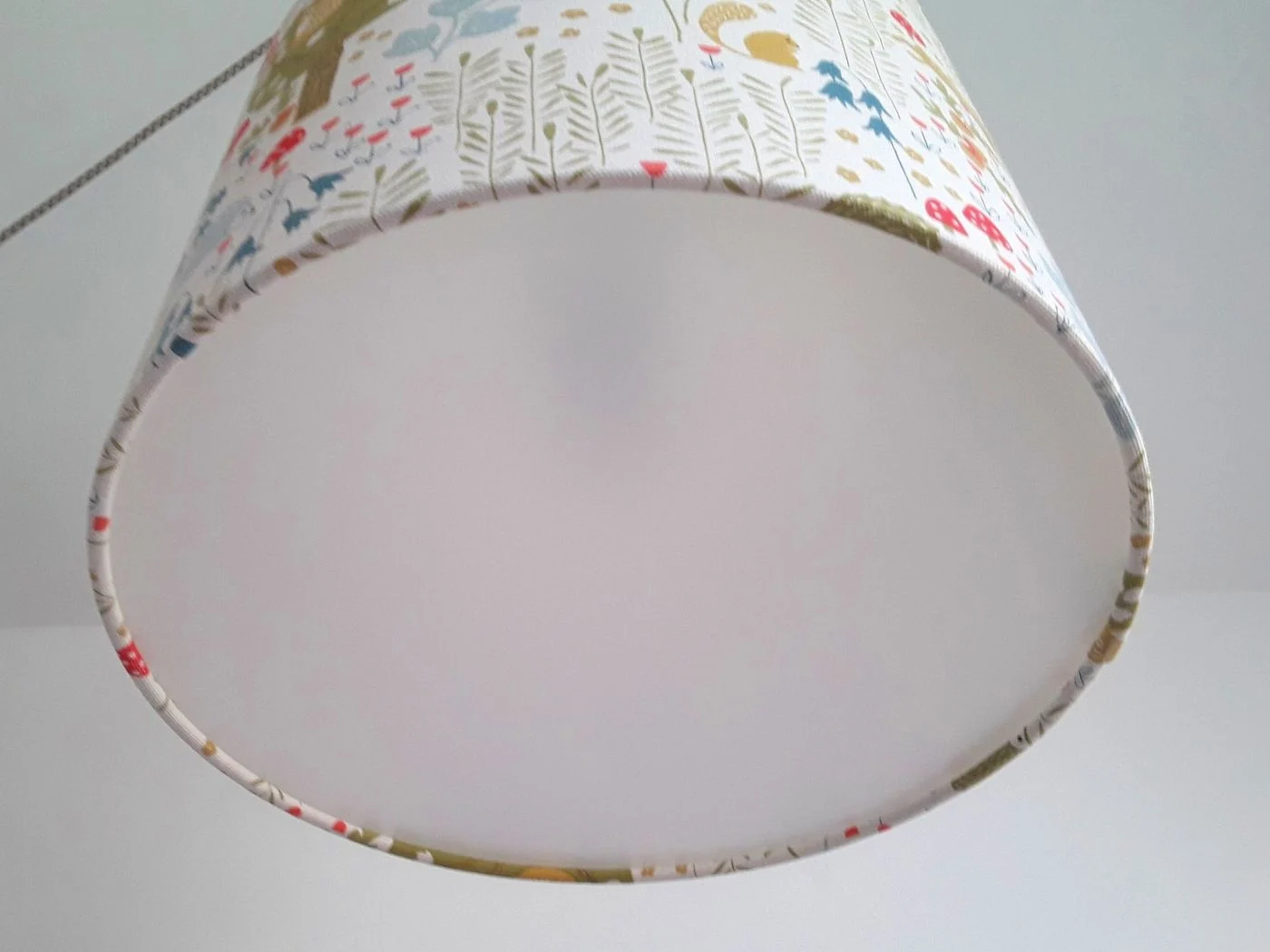
Before choosing that look, consider where the exposed bulb bothers you. The view straight up into a pendant and the view across a room toward a table lamp are different buying problems. Ask for confirmation that the diffuser is intended for your shade’s mounting orientation and the angle you’re trying to screen.
A diffuser solves a particular view of a light. For the room around that fixture, the broader starting point is cozy living room lighting.
Match the diffuser to its support, then its diameter
Coverage depends on where the panel sits, so identify the support before shopping by size. Hawthorn’s lower-rim disc is an example of a panel supported by the shade itself. A flat circle in a product photo tells you little about whether your own shade has a suitable place for it to rest.
Sansho’s diffuser range illustrates why the product name alone isn’t enough. Its drop-in version can be added to an existing shade without extra fittings. Its clip-in version uses clips built into the shade frame and must be ordered with the shade. Its floating version comes with a separate fitting and sits higher inside. Those are descriptions of Sansho’s systems, not promises about other sellers’ products.
For an existing shade, the useful question is therefore more precise than “Do you sell diffuser discs?” Ask whether the exact panel and any required support are compatible with your shade model. A replacement panel for an existing assembly and a complete add-on assembly are different purchases.
A shade’s listed size doesn’t settle the disc fit
Once the support is identified, the remaining question is which dimensions the seller needs. Leo and Cal explicitly warns that its diffuser may not fit a shade bought elsewhere. A matching size label therefore isn’t enough evidence of cross-brand compatibility.
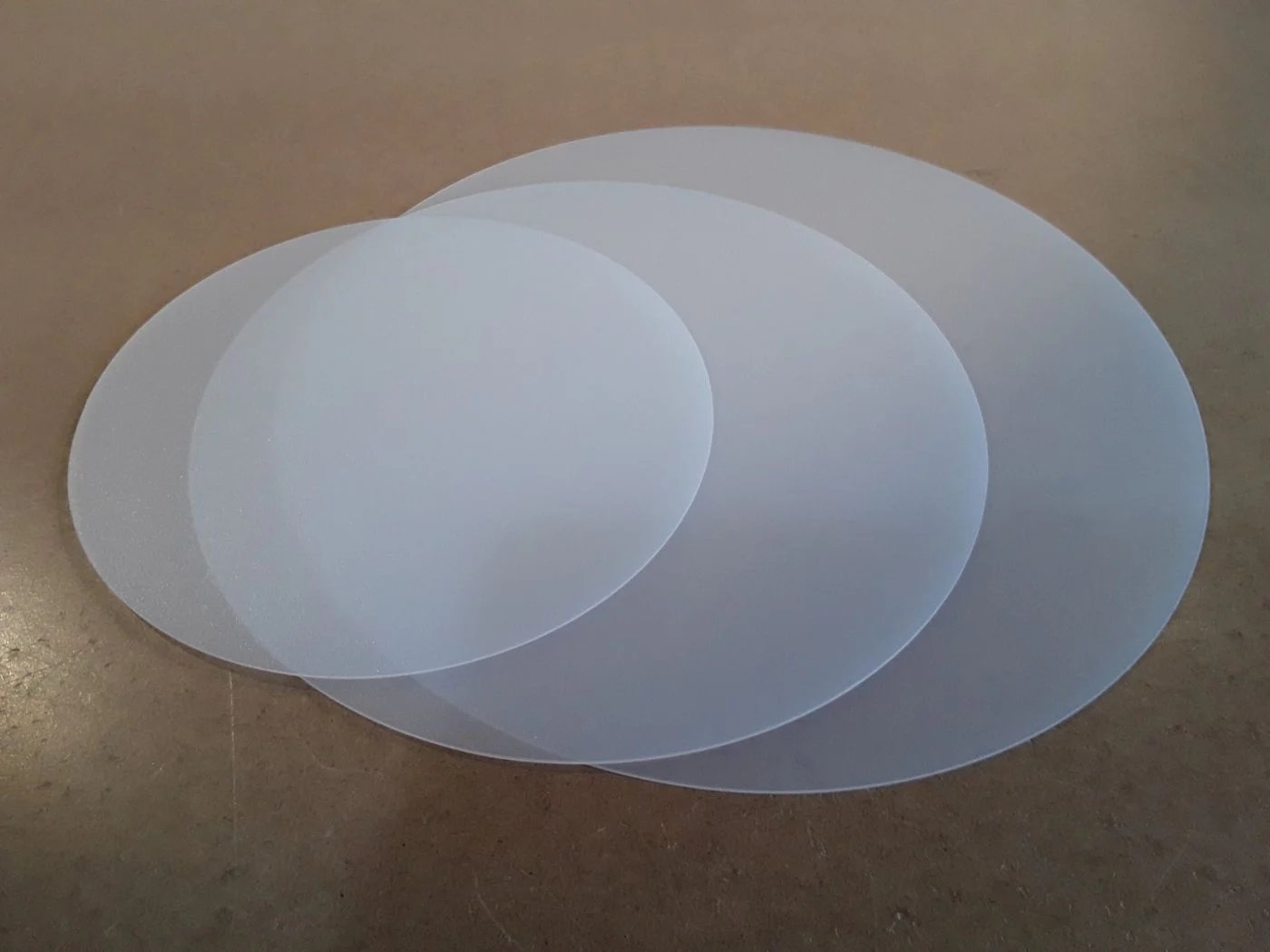
For a fit inquiry, supply the shade’s make and model if known, a photograph of its underside, and the seller’s requested measurements. Ask whether the listed size refers to the disc itself or the shade it is meant to fit. Request confirmation of the actual inside opening and bearing ring, the panel’s thickness, and any hole or retainer the assembly requires.
Removal deserves the same attention as fit. Ask how the panel comes out for bulb access and cleaning, especially if the shade has a narrow opening elsewhere. A disc that looks right in a front-on product photograph still needs a confirmed way into and out of the intended shade.
Bulb clearance belongs to the exact diffuser assembly
A physical fit leaves another question: whether the proposed diffuser and light source can be used together. Follow the shade, fixture, and diffuser makers’ instructions for that combination. Material names such as polypropylene or acrylic don’t supply a universal heat rating or clearance by themselves.
Leo and Cal, for example, gives bulb-type clearance guidance for its own diffuser. That guidance belongs to that product; it doesn’t establish a clearance for another brand’s disc. An LED label alone also doesn’t answer whether a particular shade and panel arrangement is approved.
If the listing omits the needed guidance, request the diffuser manufacturer’s instructions covering bulb type, clearance, support, and ventilation before use. Keep the fitting inquiry tied to the exact products rather than treating an attractive installed photograph as a safety specification.
For a replacement, the most useful starting point is the original shade or diffuser maker and its model information. For an add-on, request written fit confirmation before placing the order. The purchase is ready when the seller can explain both what supports the panel and why that panel belongs in your light.
Explore the full guide: Cozy Living Room Lighting: Start With the Lamps You Have