When the dining table shares a room with the sofa, lighting zones need to follow what people are doing in each place. Give the table enough light for the meal or work in front of you, keep the seating light suited to its own activity, and leave the route between them visible. The useful check is whether both places still work when someone uses them at the same time.
In this guide
Give the dining table and sofa separate jobs
Start with the evening that causes the most friction: perhaps someone answers emails at the table while someone else stretches out on the sofa. The table needs light on the work surface; the person resting may want a quieter view. Trying to satisfy both with the same room-wide light can leave one person wanting a change.
Treat a lighting zone as an area served by a particular light, rather than a division drawn across the floor. A table and sofa can sit close together and still have different lighting roles. Rugs and furniture may suggest where those areas begin, but the useful boundary is where the activity happens.
For the table, name the actual task: eating, reading a letter, or using it as a desk. For the sofa, decide whether the evening calls for conversation, reading, or simply sitting. A person reading on the sofa needs light on the page even if the dining area is already bright.
Use the lights you already have to see which activities they serve. If one switch controls both areas, that limits how independently they can change; plan around the available combinations before rearranging anything. The broader cozy living room lighting guide puts this kind of activity lighting alongside the room’s overall background light.
Check the dining light from the sofa, too
Separate jobs still share a room, so a dining light has to work for someone sitting beyond the table. In the room pictured here, the dining chair sits just behind the sofa, beneath an overhead light. That close relationship makes the view from each seat worth checking.
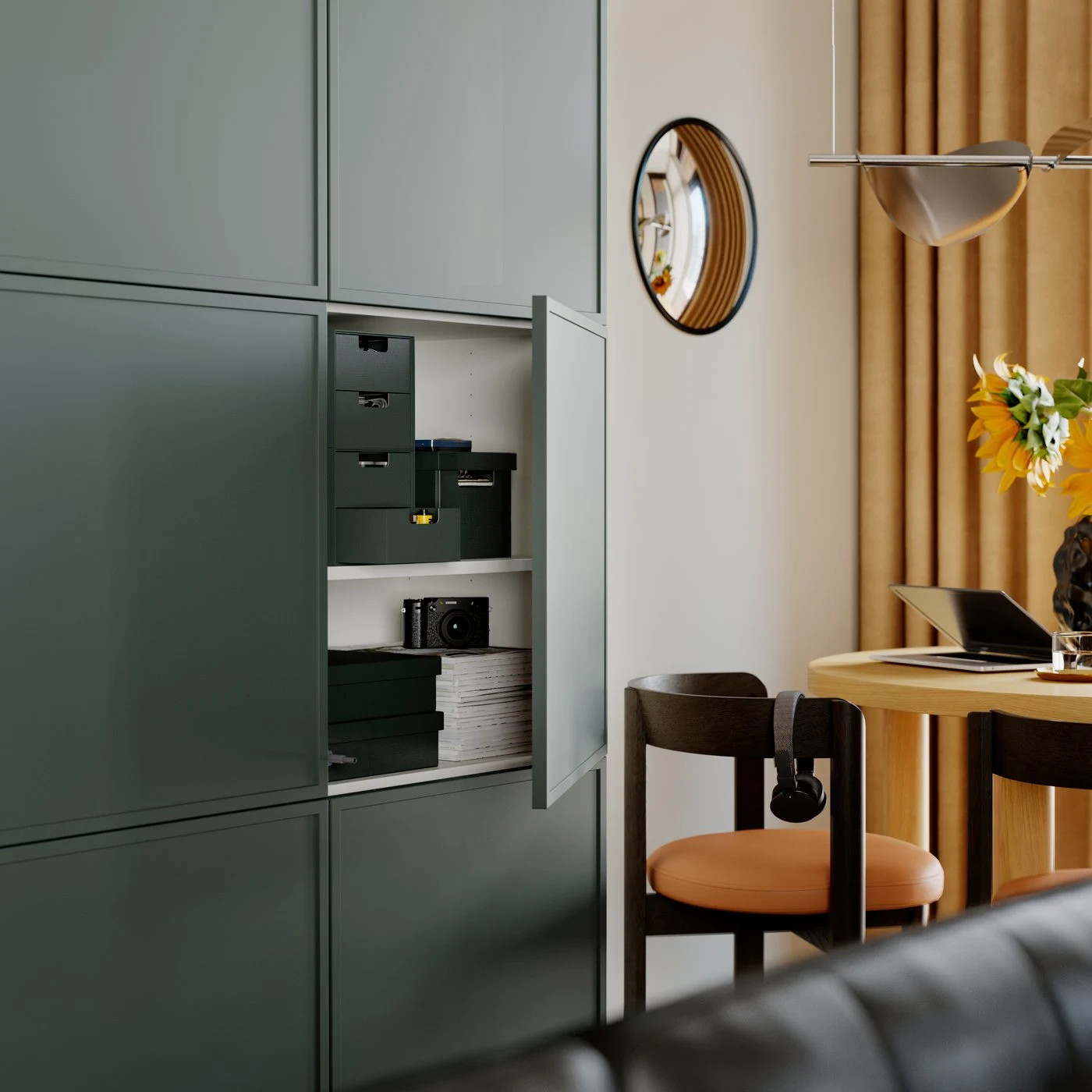
With the table light on after dark, sit in the dining chair and look at what you would normally use, whether that’s a plate, a book, or a sheet of paper, checking for a shadow from your body. Then sit on the sofa, facing the direction you usually face, and check whether the table light intrudes into that view.
If a movable lamp is causing the problem, try another existing surface within its cord’s reach and repeat the seated check. Keep the cord out of the walking route. Leave fixed fixtures in place; use another available light combination if the fixture’s position doesn’t suit both seats.
The aim isn’t to make the table disappear from the sofa. A lit dining area can remain part of the room. What matters is whether its light lets the person on the sofa settle into their own activity without wanting to turn the other person’s light off.
Keep the space between the zones usable
A comfortable seated view is only part of the arrangement; people still need to get up from the table and move past the sofa. Check the room with a dining chair pulled out as it would be during dinner. A lamp base or cord that looks neatly tucked away with the chair pushed in may occupy the space someone actually uses.
An existing cabinet lamp may be useful between the activity areas. The picture below shows a shaded lamp on a cabinet beside the seating, with part of the dining area nearby. The photograph shows that placement; its daytime appearance doesn’t establish how much light the lamp provides after dark.
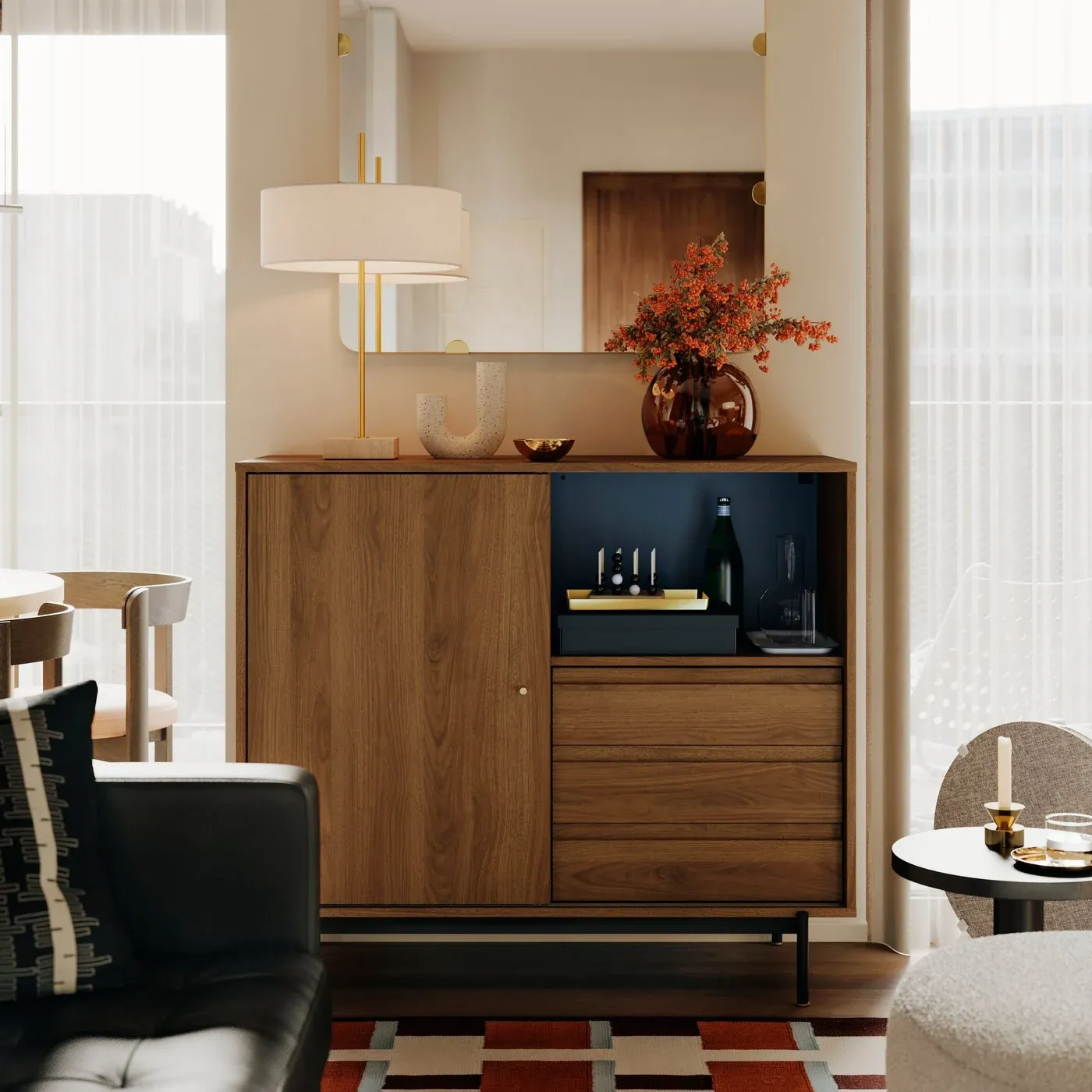
Try that background light with the table light off, then look along the route between the table, sofa, and doorway. Can you make out the furniture edges and floor clearly? If the route is too dim, keep another existing room light on. A soft-looking corner isn’t a reason to leave the walking space hard to see.
Keep the layout that works with people in it. If the only place a floor lamp fits blocks a chair from sliding back, give that space back to the chair and use a different existing light.
Choose switch combinations for a shared evening
Once the seats and walking space work, turn the useful arrangements into combinations you can repeat with the switches already available, using the table below as a starting point that changes with what each person is doing.
| Evening activity | Dining area | Sofa area and shared route |
|---|---|---|
| Eating together | Keep the table light on so the meal is easy to see. | Try a background light if the rest of the room feels abruptly dark. |
| Working at the table while someone rests | Keep the light needed for the tabletop task. | Use the quieter combination that passed the sofa-view check, keeping the route visible. |
| Reading in both areas | Keep light on the table’s reading surface. | Keep the sofa reader’s page lit as well. |
| Settling on the sofa after dinner | Turn off the table light once the table is no longer in use. | Keep the seating and background lights that make the remaining activity and route comfortable. |
If the table still holds someone’s book or unfinished work, the room hasn’t switched fully to resting. Keep their task light available and adjust the unused lights around it. The combination can change again when they finish.
Make the final check from the sofa with the dining chair still pulled out. That’s the shared room as it gets used: a place for a meal, a place to sit, and enough space and light to move between them.
Explore the full guide: Cozy Living Room Lighting: Start With the Lamps You Have