Living room lamp glare on a TV usually calls for changing the light’s position or direction, then checking the screen from the sofa. A dimmer may soften a reflection, but the lamp can still appear in the picture. Start by identifying the reflected source; a glowing shade, an exposed bulb, and a bright window need different adjustments.
You don’t need to rearrange the whole room at once. The useful question is whether a small change removes the distracting light while leaving enough illumination for the people using the room.
In this guide
- Find the lamp reflected in the TV before moving furniture
- Place the lamp where the TV no longer reflects its bright source
- Use lamp direction and brightness for different problems
- Check windows when lamp adjustments leave the TV reflection unchanged
- Recheck the lamp from every TV seat before keeping the change
Find the lamp reflected in the TV before moving furniture
A dark screen makes reflected lamps easier to spot. In the example below, both a shaded lamp and a round glowing lamp appear on the television. The shade hasn’t prevented the lamp itself from being reflected.
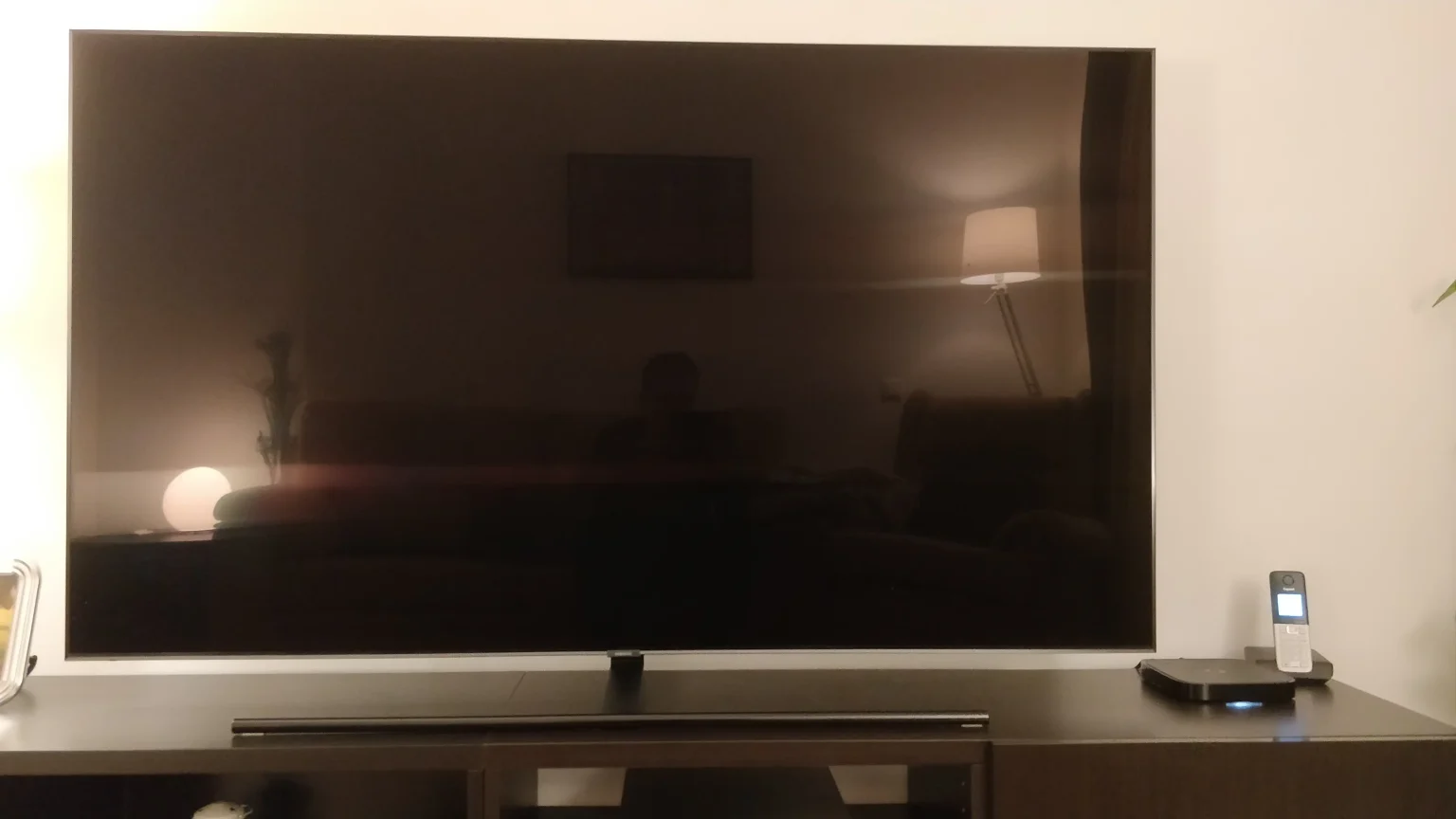
For a simple check, sit in your usual viewing position with the television off and the room lights in their normal evening setting. Look for the shape of a shade, a bright point, or a patch of reflected light. Don’t judge the position while standing beside the screen: that’s a different view from the seat where the reflection bothers you.
Switch off the suspected lamp and look again. If the distracting patch disappears, you’ve found a source worth adjusting; if it stays, leave that lamp alone and check another light. Treat these checks as a way to narrow the problem, rather than a promise that every reflection will disappear.
The distinction matters when a lamp feels comfortable beside the sofa but appears in the TV. Light shining directly into your eyes and light reaching you through the screen’s reflection are separate observations. Hiding the bulb from your seated view doesn’t prove that its reflection is gone.
For the wider room layout, use the lighting jobs in our living room guide to decide which fixtures you need during an evening. Here, keep the TV reflection as the specific problem you’re trying to solve.
Place the lamp where the TV no longer reflects its bright source
Once you’ve identified the lamp, compare its original spot with another position you can accommodate beside the seating. Return to the same cushion to judge whether the reflected light has shifted. Keep the television and the other lights unchanged so you can judge that move.
A lamp beside or behind the television is another possible arrangement when you want light around the TV wall, but treat that as a position to try rather than a universal glare-free zone. Check that the bulb isn’t glaring directly toward the sofa and that a bright wash isn’t landing across the screen.
Behind the sofa isn’t an automatic solution either. A lamp can be out of your direct view and still visible in the screen in front of you. Let the reflection decide whether the move helped; the furniture label alone won’t tell you where the light will appear.
There isn’t a single distance from the TV that guarantees success in every living room. The practical limit may be your side table, outlet, or space beside an armchair. If none of those positions works, compare a change in the lamp’s direction before replacing furniture or buying another fixture.
Use lamp direction and brightness for different problems
When the base has nowhere useful to move, the lamp head or its controls may still offer an adjustment. Choose the change that matches what you can actually see on the screen.
| What remains distracting | A change worth trying | What to look for afterward |
|---|---|---|
| A bright adjustable lamp head | Aim the head away from the TV and toward the surface needing light. | Does the screen improve while the book or chair stays lit? |
| The whole glowing shade | Compare another lamp position. | Has the reflected shade moved out of the viewing area? |
| A reflection that’s faint but still too bright | Lower a compatible dimmable lamp. | Is the reflection less distracting during the program? |
| A lamp needed by someone reading | Adjust its aim toward the page. | Can that person still read without the light bothering the TV viewer? |
A shade can hide an exposed bulb, but a luminous shade may remain visible in the television. That’s why changing the shade isn’t a guaranteed cure for the reflection shown in the first photo. Check which part of the fixture is causing trouble before treating another shade as the answer.
Dimming changes the light’s intensity; it doesn’t move the lamp’s reflected image. If your lamp already supports dimming, compare a lower setting before buying anything. Follow the bulb and control manufacturer’s compatibility instructions rather than assuming every LED bulb will dim with your existing switch.
If switching off the offending lamp leaves a reading seat unusable, keep that need in the plan. Our guide to how many lamps a living room needs starts with the areas needing light, which helps when the TV and a reading chair share the room.
Check windows when lamp adjustments leave the TV reflection unchanged
A reflection that stays after the lamps are off may come from daylight or another fixed source. The photograph below shows bright window openings and a pendant reflected in the same screen. Moving a portable lamp wouldn’t remove those window shapes.
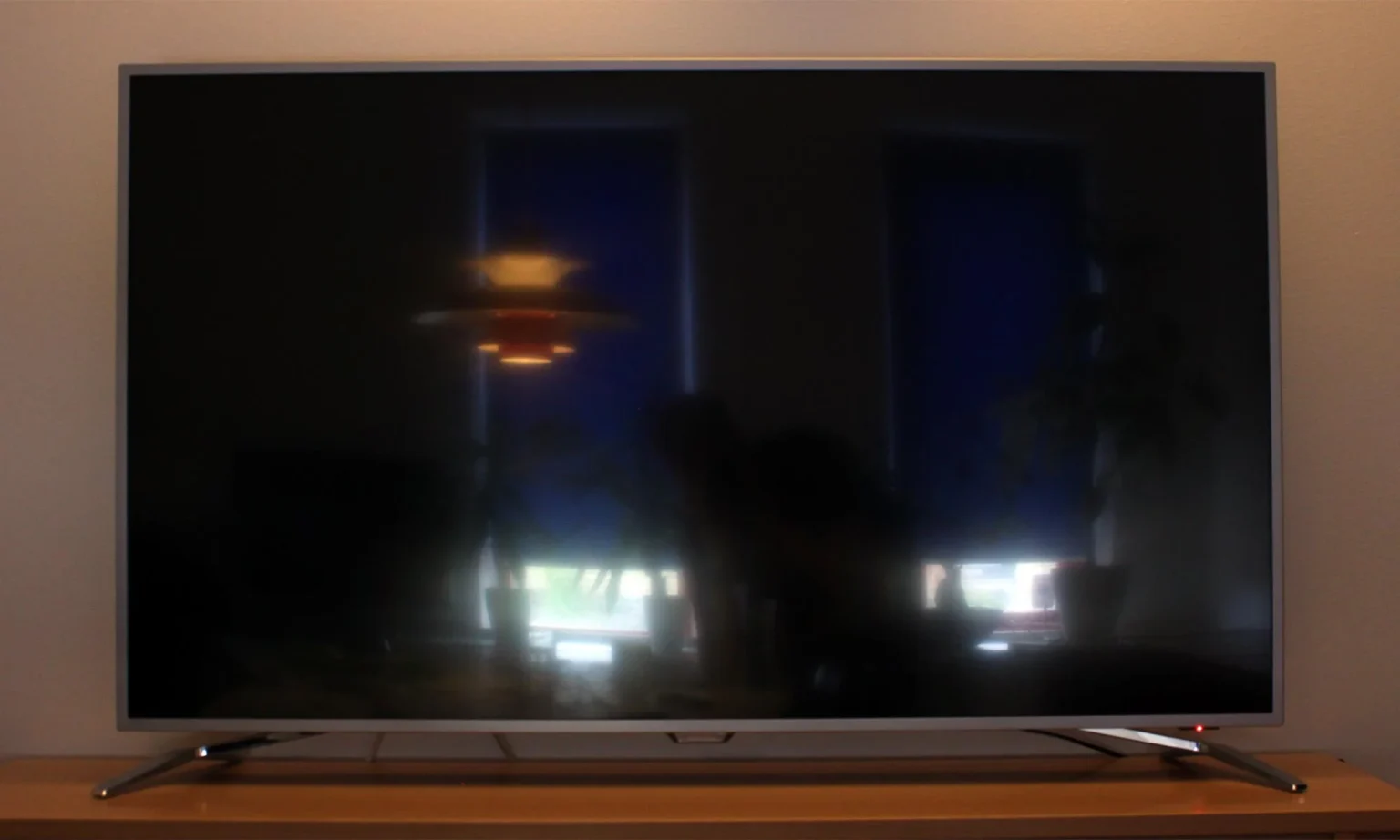
In this television’s review, FlatpanelsHD describes light-source reflections and their visibility in dark parts of the picture. The image illustrates the problem; it doesn’t show a before-and-after result from rearranging this room.
For a window reflection, compare the screen with your existing curtains or blinds closed. If the window shape becomes less distracting, you’ve identified a daylight issue that a lamp adjustment alone won’t solve. Repeat that comparison at the time of day when you usually watch, since an evening check won’t tell you what afternoon daylight looks like.
For an overhead fixture, compare the picture with that light switched off while keeping useful portable lighting on. You may find that a separate TV setting for the room works better than using every fixture throughout the evening.
Recheck the lamp from every TV seat before keeping the change
After a change looks promising, turn on a familiar program and look at a darker scene. The off-screen check helps locate light sources, but the final decision is whether the reflection interrupts the picture you watch. A faint reflection on an unused screen may not justify a room arrangement you dislike.
Then check the other seats people regularly use. A lamp position that works from the center cushion may still bother someone at the end of the sofa. Keep the arrangement that serves the occupied seats and leaves the room useful for its other evening activities.
You can stop when the distracting reflection is reduced enough for comfortable viewing and the remaining lights still do their jobs. Keep a note of the lamp position and setting that worked, so you don’t have to solve the same problem again after moving things to clean.
Explore the full guide: Cozy Living Room Lighting: Start With the Lamps You Have