A replacement lampshade needs the right attachment as well as the right size, so identify the existing fitter—spider, UNO, or clip-on—and record the old shade’s top and bottom diameters, slant height, and vertical height. The detail that’s easy to miss is where the fitting sits inside the shade: matching the outside shape alone can still leave the new shade sitting differently.
In this guide
- Identify the lampshade fitter before comparing sizes
- Spider fitter: a washer rests on a harp
- UNO fitter: check slip versus threaded
- Clip-on fitter: match the clip to the bulb shape
- Measure the old lampshade without mixing slant and height
- Check fitter drop when a matching shade sits differently
- Keep the replacement lampshade details together before ordering
Identify the lampshade fitter before comparing sizes
The fitter is the part of the shade frame that connects it to the lamp. Look at that connection rather than choosing from a photo of the complete lamp. A pale drum shade can hide very different hardware, and its fabric tells you little about what will hold it up.
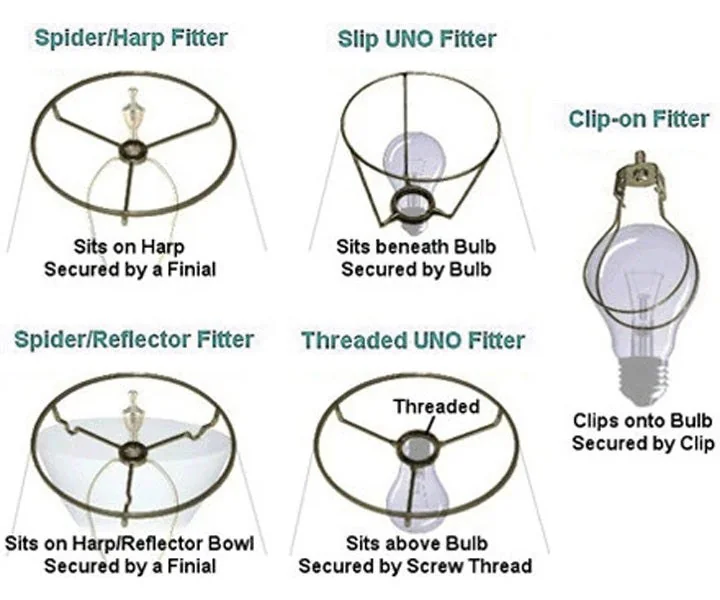
The diagram below separates the common attachment arrangements. It also includes a reflector-bowl variant; this guide focuses on spider, UNO, and clip-on replacements. Use the drawings to name the connection you already have, then compare the actual replacement specifications.
For a room that feels harsh, first check whether the shade is the problem you need to solve. Our cozy living room lighting guide starts with the view from your seats and the jobs your existing lamps need to do.
Spider fitter: a washer rests on a harp
A spider fitter has support arms meeting at a central washer. That washer rests on the post at the top of a harp, the metal support rising around the bulb. A small cap, called a finial, screws onto that post. The finial holds the shade in place.
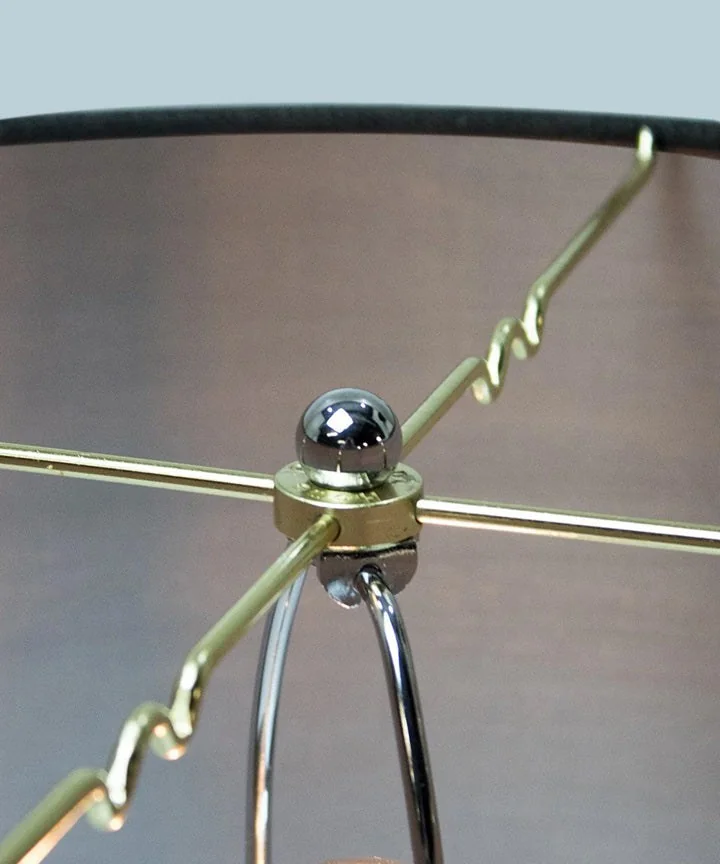
If your current lamp uses this arrangement, look for a spider replacement and compare its washer, drop, and stated harp requirements. A listing’s photograph of a harp doesn’t tell you whether the harp or finial is included, so check the contents separately.
UNO fitter: check slip versus threaded
An UNO fitter connects at the lamp socket without a separate harp, and the name covers different designs: a slip UNO has a plain ring, while a threaded UNO has threads inside its ring to meet a matching socket. Downbridge versions can position the fitting above a downward-facing bulb.
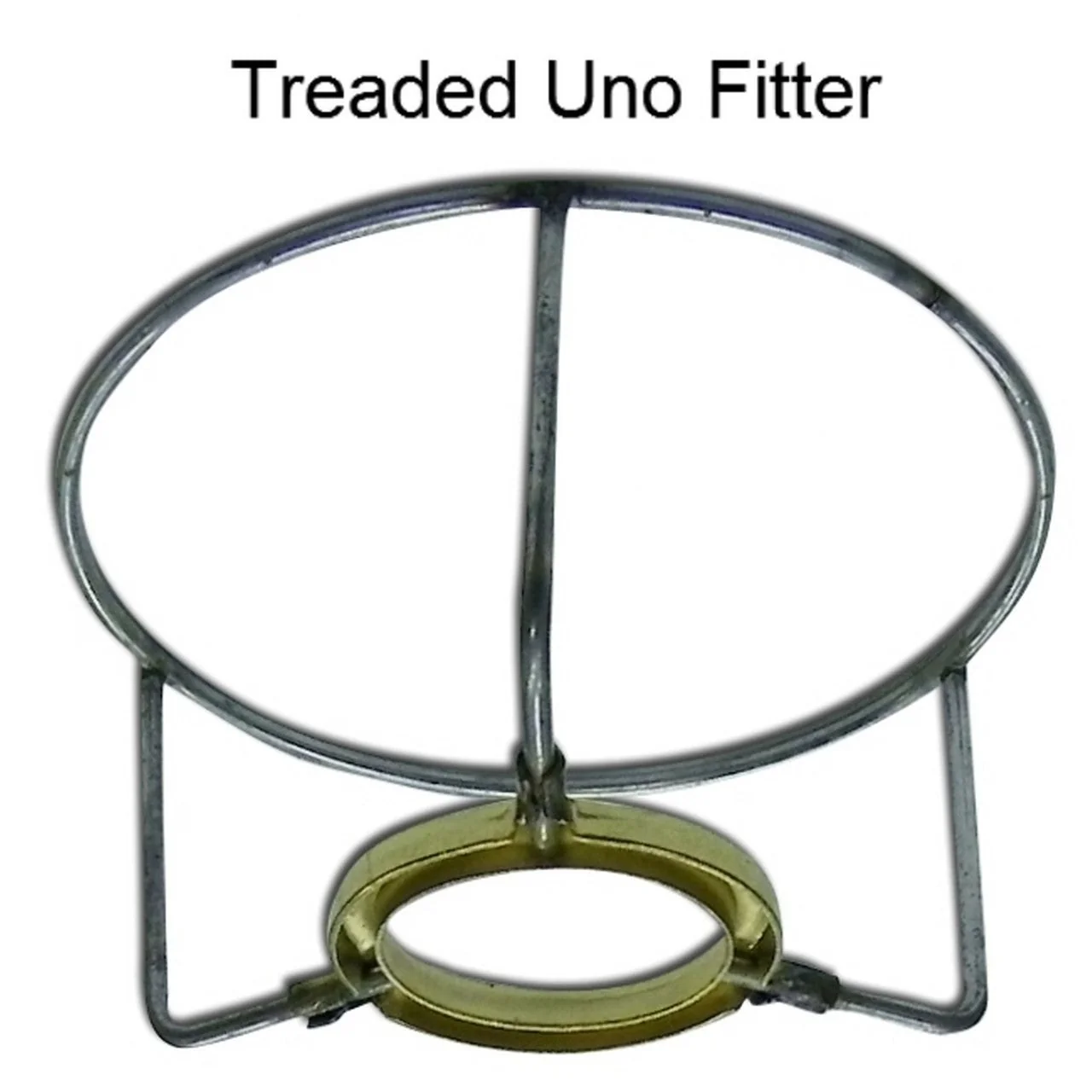
For a new UNO shade, keep the subtype in your search and compare the opening, thread details where needed, and mounting position. A ring that looks about the same width in a photo isn’t a confirmed match. If the seller only says “UNO,” ask which design the shade uses before ordering.
Clip-on fitter: match the clip to the bulb shape
A clip-on shade grips the bulb itself with a springy metal clip. Clips made for rounded bulbs and those made for candle-shaped bulbs have different forms. The close-up below shows the rounded-bulb arrangement, rather than a socket ring or harp connection.
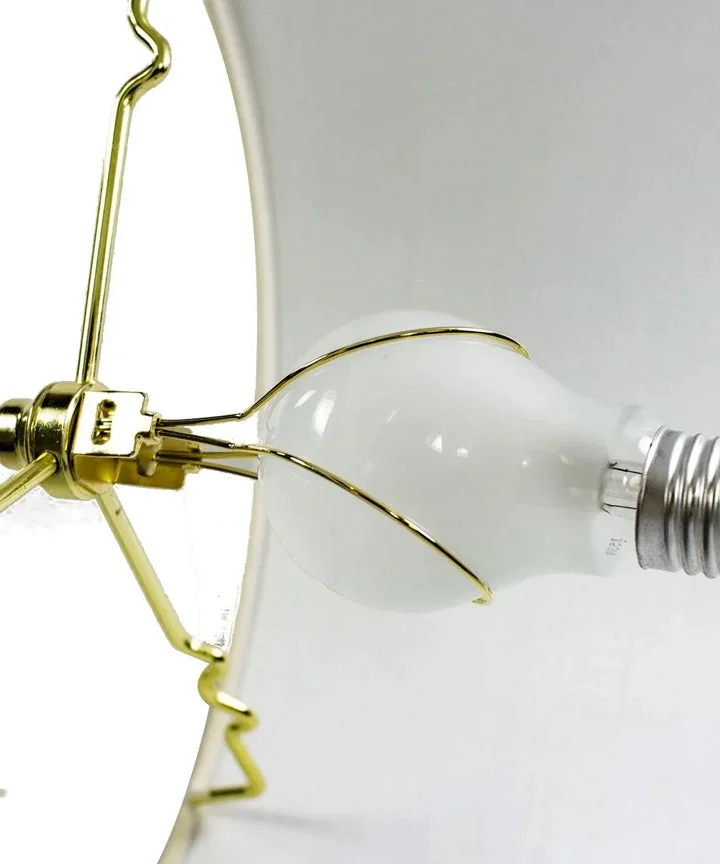
Check the new shade’s intended bulb shape and the fit guidance supplied with it. Follow the lamp, shade, and bulb makers’ limits for the combination; the fact that a clip can grip a bulb doesn’t settle those requirements.
Measure the old lampshade without mixing slant and height
Once the attachment is identified, record the shade’s dimensions with their names attached. Lamps Plus’s measurement guide distinguishes top diameter, bottom diameter, slant, and vertical height. A bare string of numbers is harder to compare when another shop uses “height” differently.
| Dimension | Where the measurement goes |
|---|---|
| Top diameter | Straight across the top opening through its center. |
| Bottom diameter | Straight across the bottom opening through its center. |
| Slant height | Along the outside sloping side, from the top rim to the bottom rim. |
| Vertical height | Straight down between the top and bottom rim levels. |
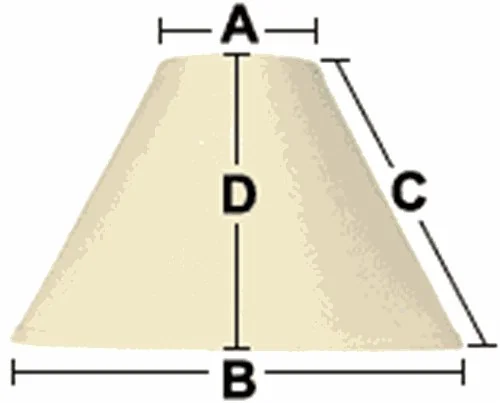
On a tapered shade, the sloping side and the straight vertical height describe different distances. When a product lists top × bottom × height, read its diagram or size notes to establish which height it means. Compare slant with slant. Compare vertical height with vertical height.
For an oval or rectangular shade, record width and depth rather than reducing the opening to one diameter. Keep inches beside each measurement. Record the shape as well. If the old shade already crowds a side table, its size is a reference for what to change rather than a target to copy.
Check fitter drop when a matching shade sits differently
Matching the outer measurements still leaves the fitter’s position to compare. Fitter drop generally describes the distance from the shade’s top rim to its mounting ring. Canterbury Roseart’s measurement guide calls out this dimension separately from the shade’s overall size.
Two shades with similar outer dimensions can have their mounting rings at different depths. On a lamp with the same support position, that difference changes where the shade’s rims sit. Compare the old and proposed drop before assuming that a familiar diameter and height will reproduce the old placement.
For a spider shade, include the existing harp in that comparison. For UNO, keep the fitting position and socket design in view. If the listing omits drop or has an unclear diagram, send the seller the old shade’s sizes and a close-up of the connection. Don’t guess from the room photo.
Keep the replacement lampshade details together before ordering
The dimensions and fitter description are most useful when they travel together. Put the following in a note beside the product you’re considering:
- Shade shape, top opening, bottom opening, slant height, and vertical height.
- Fitter type, including slip or threaded UNO where relevant.
- Opening or thread specification supplied for the actual fitting.
- Fitter drop and a photo showing where the old shade connects.
- Any unresolved compatibility question to ask the seller.
A search such as “spider tapered lampshade” narrows the hardware and shape; the specification sheet then decides whether that particular shade fits. If a listing leaves a measurement undefined, keep it as an unanswered question rather than treating the missing detail as a match.
When the replacement arrives, compare its position on the lamp with the old shade and check the view from the chair where you’ll use it. The attachment, outer dimensions, and mounting depth should all support the result you wanted from the change.
Explore the full guide: Cozy Living Room Lighting: Start With the Lamps You Have